
Description
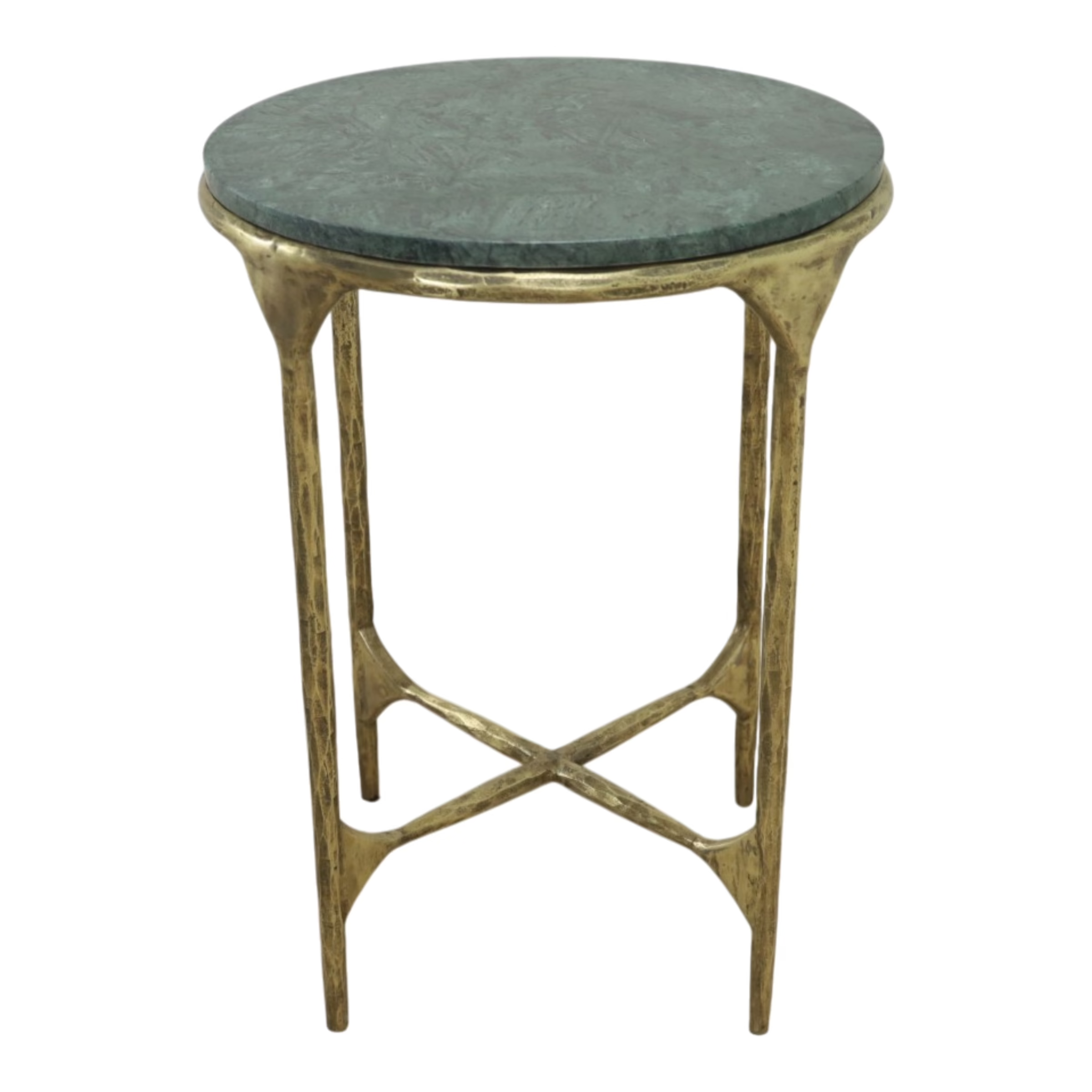
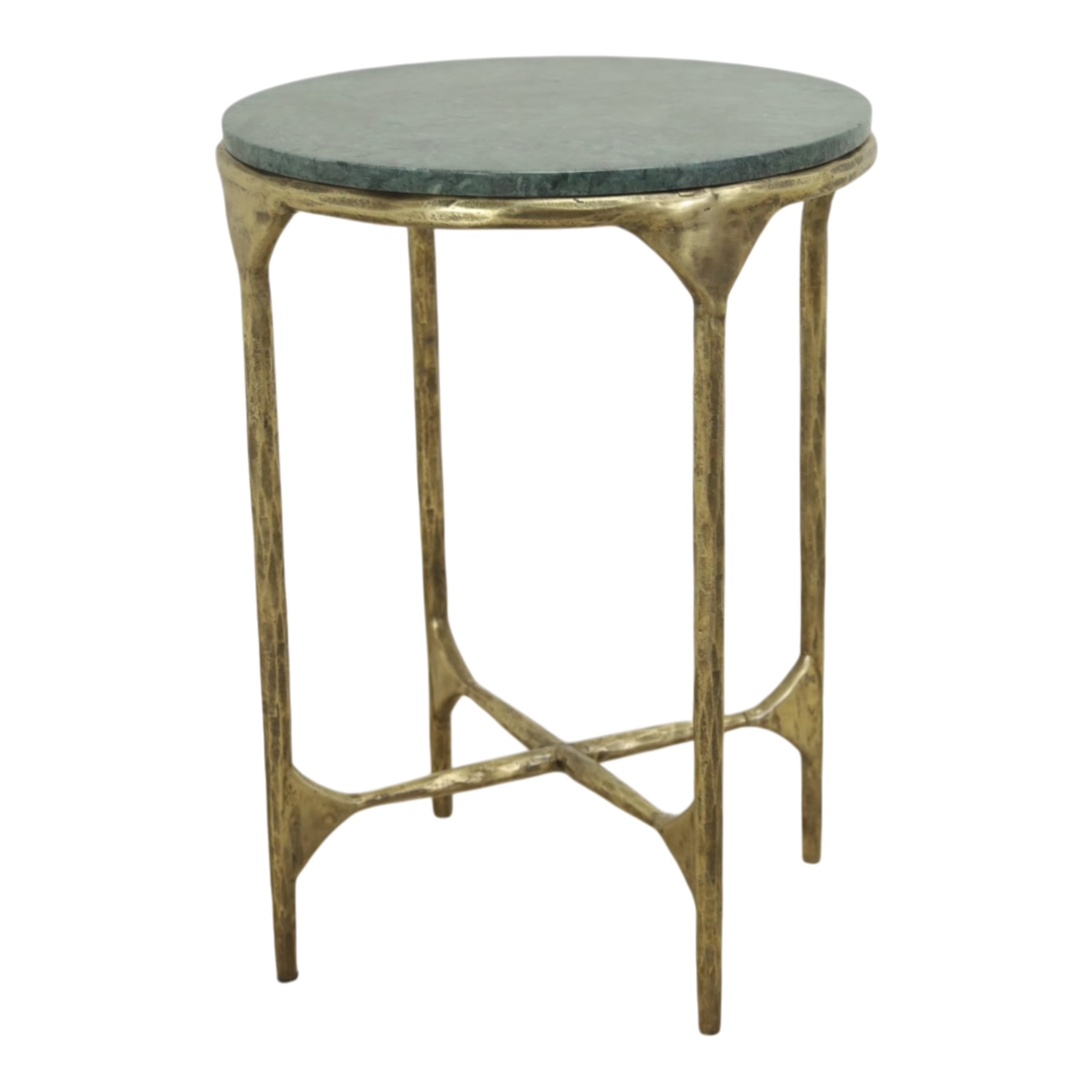
The Piton Green Marble End Table places a richly patterned green marble disc over an unusually open metal frame, creating a strong contrast between material weight and visual lightness.
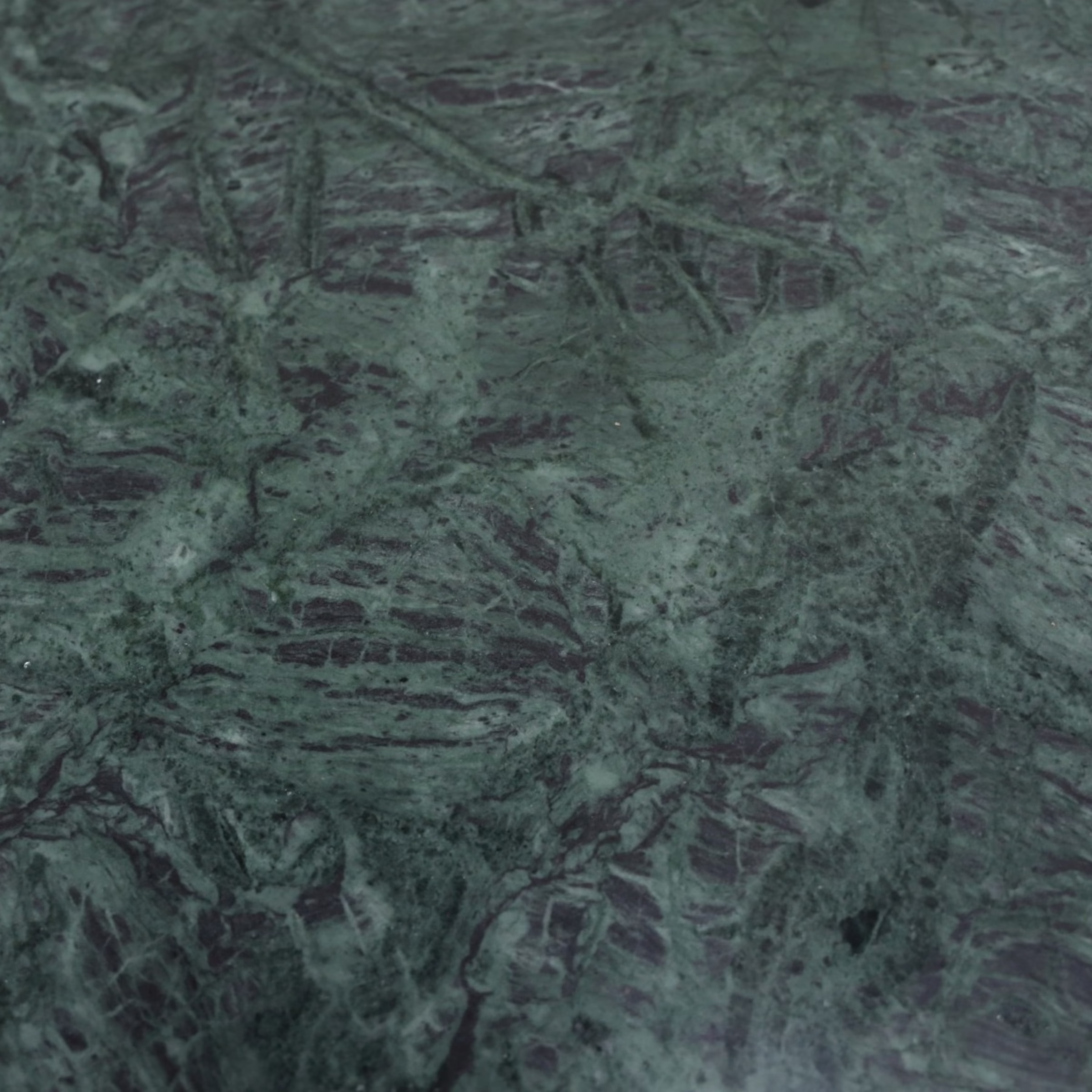
The marble establishes the first impression. From a distance, the round top reads as a deep mineral green. Move closer and the surface becomes far more complex, with variations ranging from soft green to charcoal and muted purplish markings moving irregularly across the stone. Those shifts give the tabletop depth without requiring additional ornament.
Its circular shape provides a quiet boundary for all of that movement. There are no projecting corners and little unnecessary mass, so the eye remains focused on the marble itself. A clearly defined edge profile gives the stone enough visual depth to feel substantial above the slender framework below.
Look beneath the top and the table becomes much more interesting.
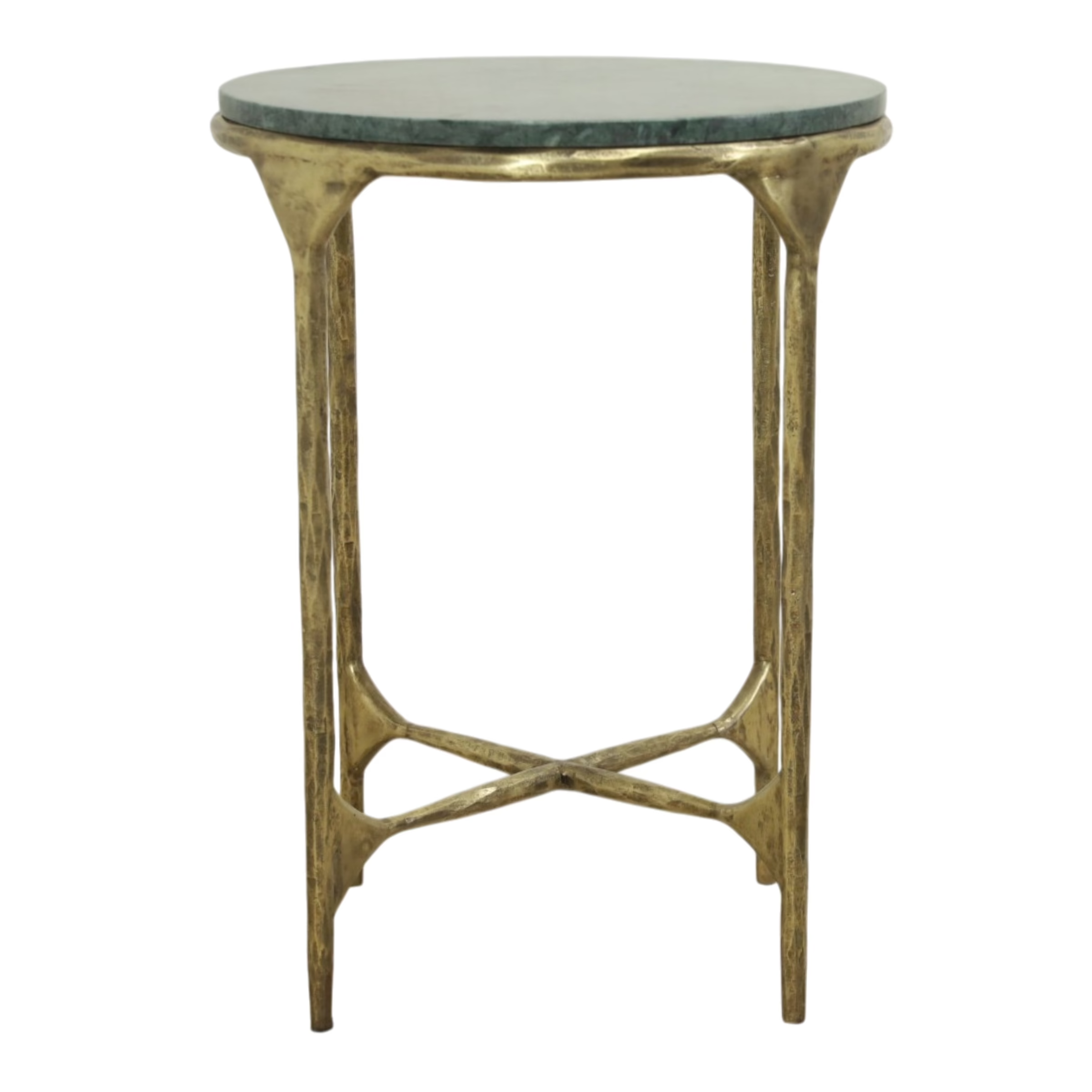
The legs do not simply meet the upper ring as thin vertical posts. Each one flares outward beneath the stone before narrowing again as it travels downward. That transition visually carries the weight of the marble and gives the frame a sculptural quality that would be lost with four ordinary straight supports.
Lower down, the structure opens dramatically. Curved braces sweep inward from the legs and cross at the center, forming an X-shaped composition while leaving most of the base visually empty. The crossing creates a central point of tension without turning the lower structure into a heavy perimeter frame.
That balance between visual weight and negative space is the key to the Piton’s design. Heavy materials do not always require heavy-looking furniture. By concentrating visual mass in the marble top and allowing the supporting frame to remain open, the table feels substantial without making the surrounding seating area feel crowded.
The metal base introduces warmth beneath the cooler green stone. Its aged-gold appearance shows subtle tonal variation rather than a perfectly uniform polished surface, giving the frame more depth when viewed in changing light. Against the marble, the effect is one of deliberate contrast: cool natural stone above, warm metal below.
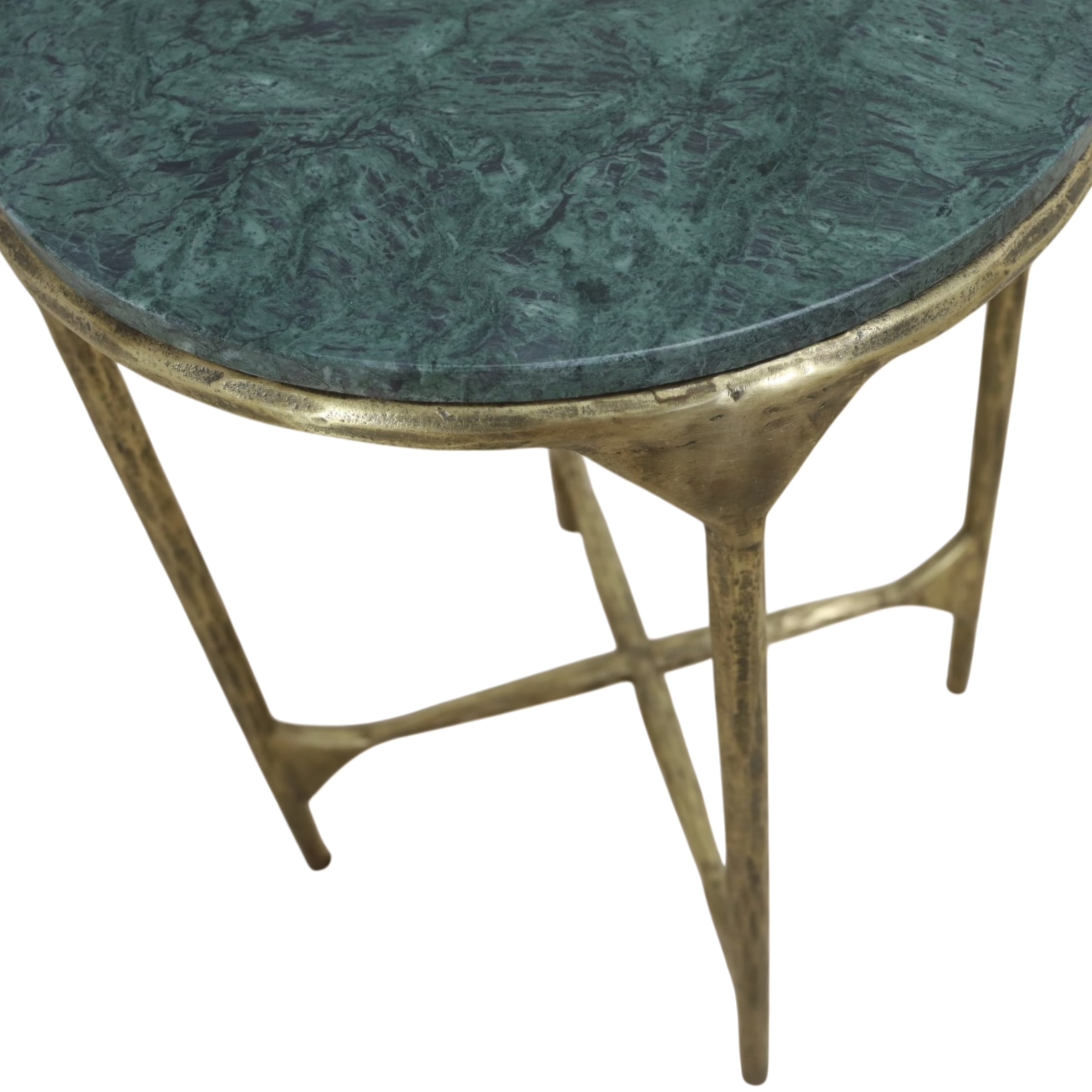
Notice the upper junction again. The metal rail closely follows the circular edge of the tabletop while the flared shoulders of the legs rise into it. That connection keeps the Piton Green Marble End Table from appearing as though a stone disc was simply placed on a generic frame. The base has its own geometry and its own visual rhythm.
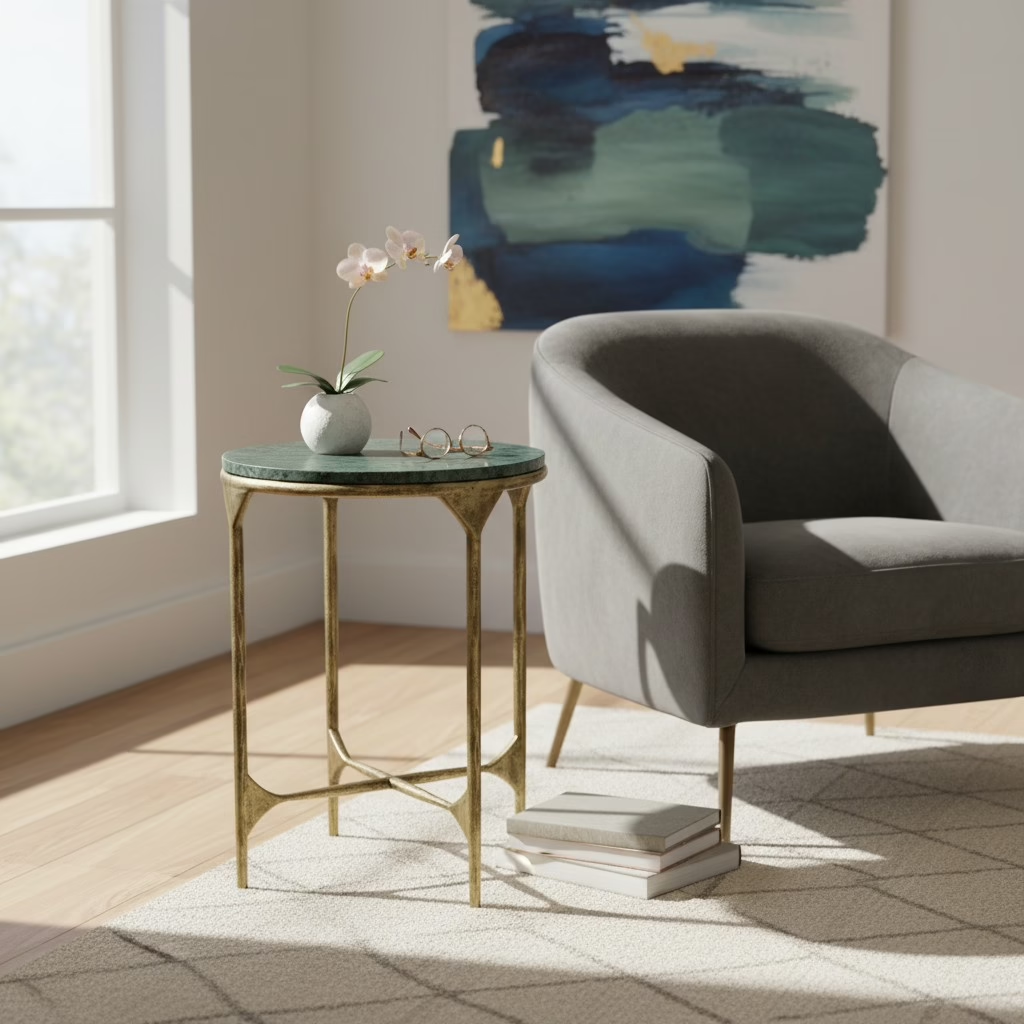
At 17″ round, the Piton occupies very little floor area. At 22″ high, it sits naturally beside many lounge chairs and sofas while providing enough surface for a drink, book, glasses, small lamp, or decorative object.
The compact scale also keeps the marble in proportion. Because the stone is already visually active, the smaller diameter allows its color and pattern to act as an accent rather than dominate the entire seating area.
This makes the Piton Green Marble End Table especially effective when a room needs one concentrated moment of color, mineral texture, or material contrast. It can introduce green into a neutral interior, connect to artwork or upholstery, or add depth beside pale oak, linen, plaster, and soft upholstery.
From across the room, the Piton reads as a slender round end table. Up close, the marble reveals its natural variation and the base reveals an unexpectedly architectural network of flared transitions, curved braces, and crossed supports.
That gradual discovery is what gives the piece its character.
A Closer Look
Notice that the lower support is not a conventional square stretcher connecting one leg directly to the next.
Instead, the braces sweep inward and cross at the center, creating an X that visually pulls the four legs together while keeping the middle of the base almost completely open.
This is why the table can carry a visually substantial marble top without feeling heavy below it.
The design lesson is simple: negative space is not empty space when it is being used deliberately. Here, the openness beneath the stone is part of the composition.
Material & Craftsmanship
The Piton’s character comes from the contrast between two very different material expressions.
The green marble top supplies natural pattern. Its coloration and markings vary across the stone, meaning each top should be appreciated for individual movement rather than exact uniformity.
The supporting metal frame relies on proportion and shape rather than applied decoration. Slender legs, flared upper transitions, softly curved lower braces, and the central crossing establish the structure visually.
Viewed from an angle, the relationship becomes especially clear: a solid round stone surface rests above a frame that occupies relatively little visual space.
It is the contrast between mass above and openness below that defines the design.
Dimensions & Specifications
Product Name
Piton Green Marble End Table
Product Type
Round End Table / Accent Table
Overall Diameter
17 Inches
Overall Height
22 Inches
Top Material
Green Marble
Base Material
Metal
Base Finish / Color
Warm aged-gold tone
Shape
Round
Design Characteristics
- Natural green marble tabletop
- Organic mineral pattern and tonal variation
- Clearly defined stone edge profile
- Four slender tapered legs
- Sculptural flared transitions beneath tabletop
- Open lower framework
- Curved lower braces
- Crossed center stretcher
- Compact 17-inch footprint
Natural Material Note
Green marble varies naturally in color, veining, mineral markings, and overall pattern. Individual tables should be expected to differ slightly from photography.
Frequently Asked Questions
What makes the Piton Green Marble End Table distinctive?
The Piton Green Marble End Table combines a richly patterned round marble top with an unusually open metal frame. Flared transitions beneath the top and an X-shaped crossed stretcher give the base a sculptural quality while preserving generous negative space.
What size is the Piton End Table?
The table measures 17 inches in diameter by 22 inches high, making it compact enough for smaller seating areas while still providing a practical surface beside many sofas and lounge chairs.
Is the tabletop real green marble?
Yes. The top is green marble, so variations in coloration, markings, and mineral pattern should be expected from piece to piece.
Will every marble top look exactly like the photos?
No. Natural marble varies. Individual tops may show different concentrations of green, charcoal, lighter mineral movement, and other markings.
What is the base made from?
The supporting frame is metal with a warm aged-gold appearance.
Where does this table work best?
The Piton Green Marble End Table works especially well beside an accent chair, at the end of a sofa, between two smaller lounge chairs, in a reading area, or anywhere a compact table is needed without introducing a visually heavy base.
Does the round top help in smaller spaces?
Yes. A 17-inch round tabletop avoids projecting corners and can make circulation around nearby seating easier than a square table of similar width.
How should the marble top be styled?
Keep accessories relatively minimal so the natural stone remains visible. A small vessel, candle, glasses, or short stack of books is usually enough.
How should I care for the marble?
Use coasters and wipe spills promptly with a soft cloth. Avoid abrasive cleaners and acidic household products. For specific stone-care treatments or sealers, follow the recommendations appropriate to the actual marble finish.


