

Description
Before you notice the grain, you notice the illusion.
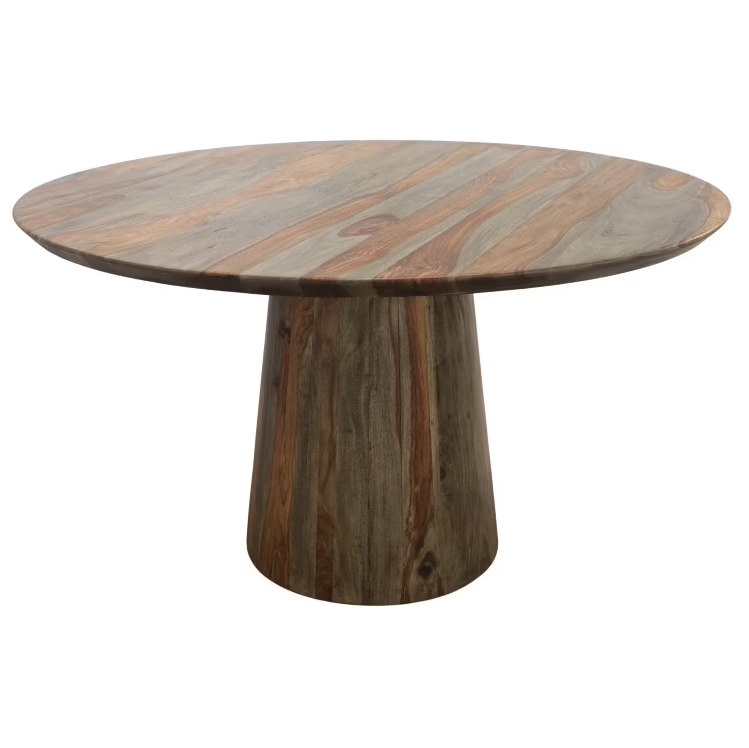
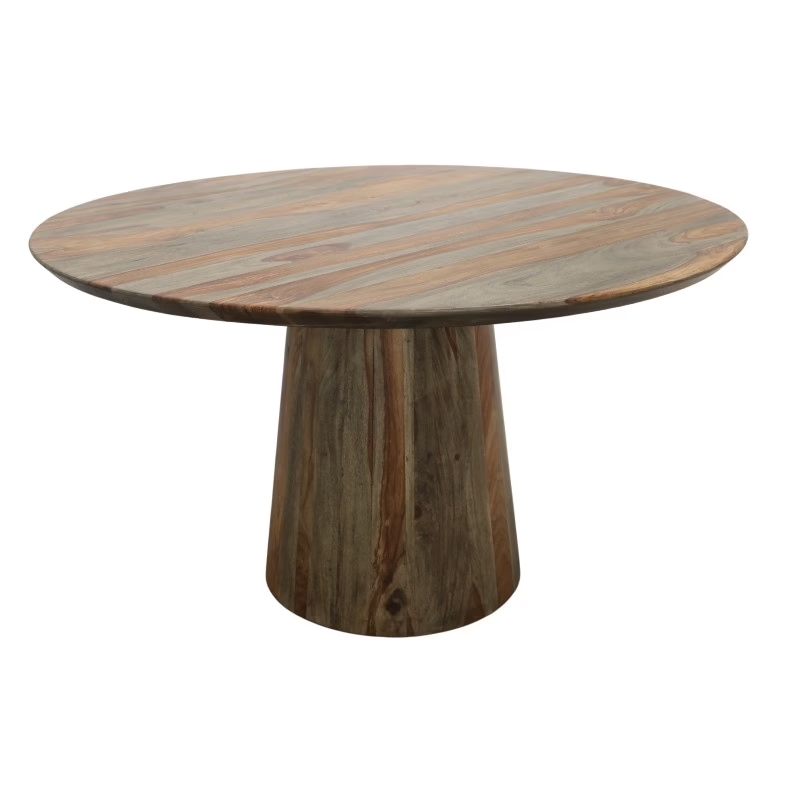
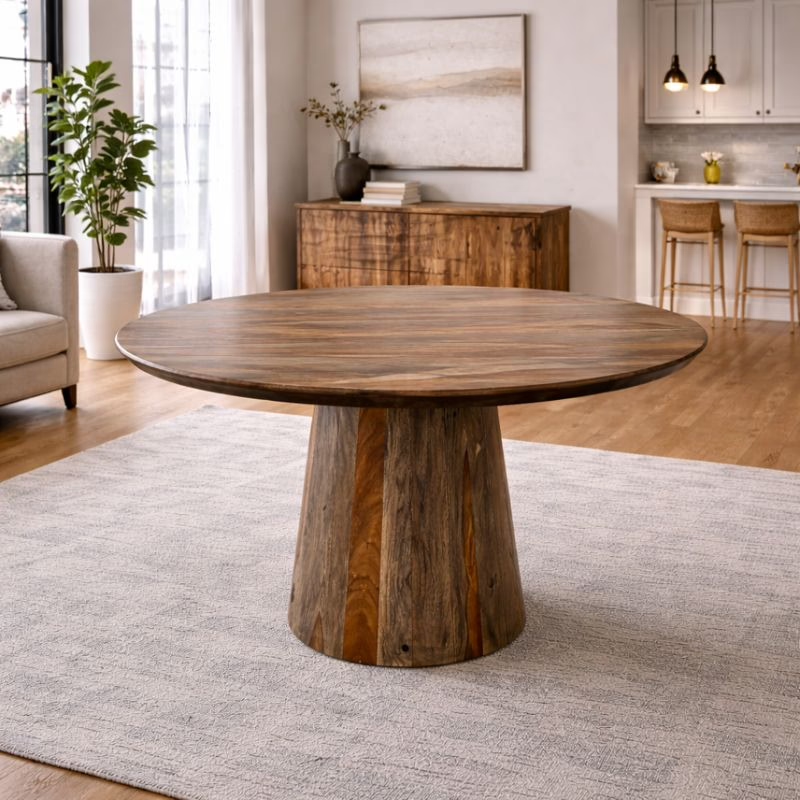
From across the room, the Malone appears to have an unusually slim tabletop. Move closer and the edge reveals the full depth of a 1.5 inch slab of solid wood. The material has not been reduced to create lightness. Its profile has been shaped to change how that substance is perceived.
That contrast gives this Round Pedestal Dining Table its identity. Physical weight remains present, but visual weight has been carefully controlled.
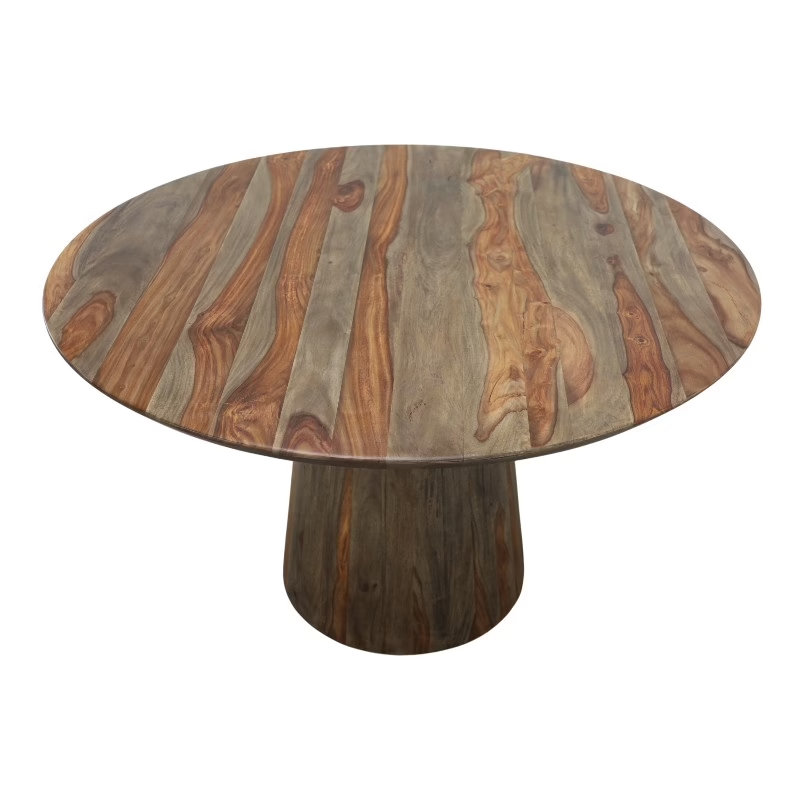
Notice how the eye settles naturally at the center. The circular top and pedestal share a common axis, aligning the table’s visual center with its structural center. Furniture often feels stable before it is touched when those two points agree. The Malone achieves that sense of order through geometry rather than ornament.
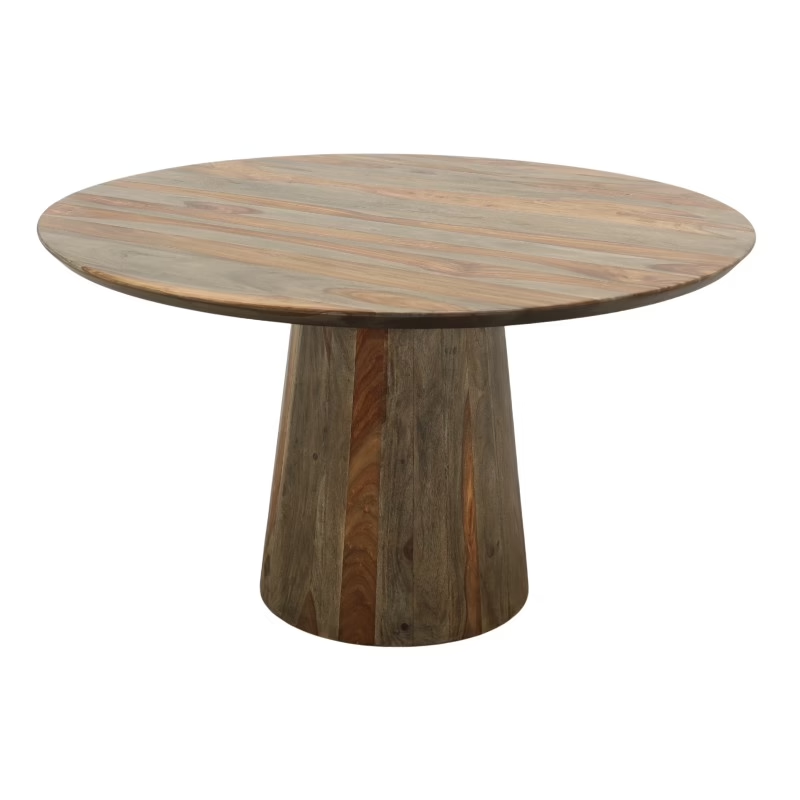
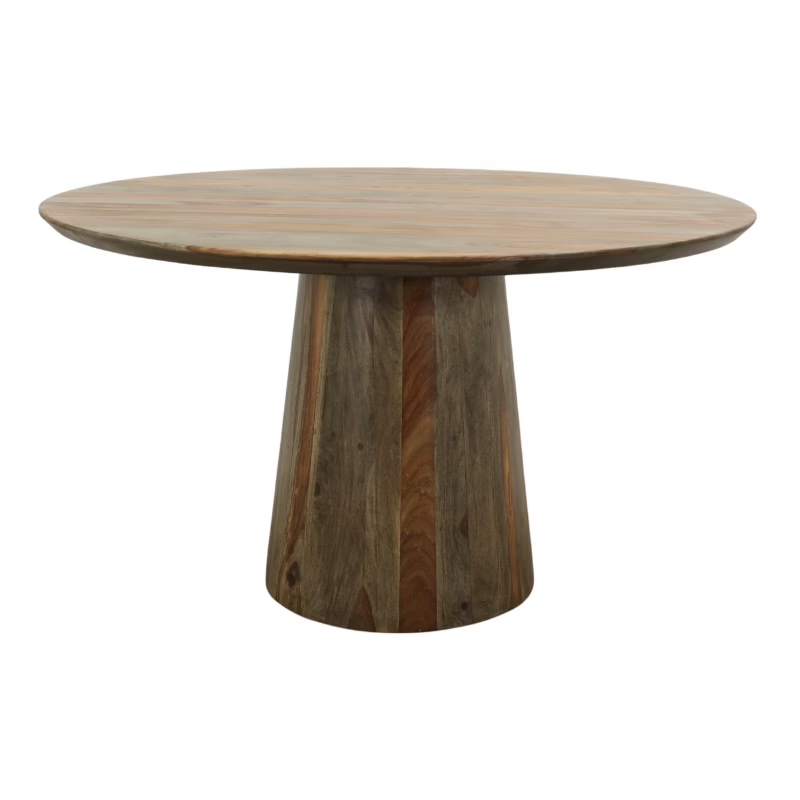
Viewed from the side, the pedestal carries substantial volume near the tabletop, then narrows as it approaches the floor. Tapering reduces the amount of mass the eye perceives at the base, allowing the form to feel grounded without appearing heavy. It is a small dimensional change with a significant visual effect.
This principle appears throughout architecture and furniture design. A column that narrows, an edge that recedes, or a base that reveals more floor can make a substantial object feel lighter without weakening it. The Malone applies that thinking to an everyday piece of furniture.
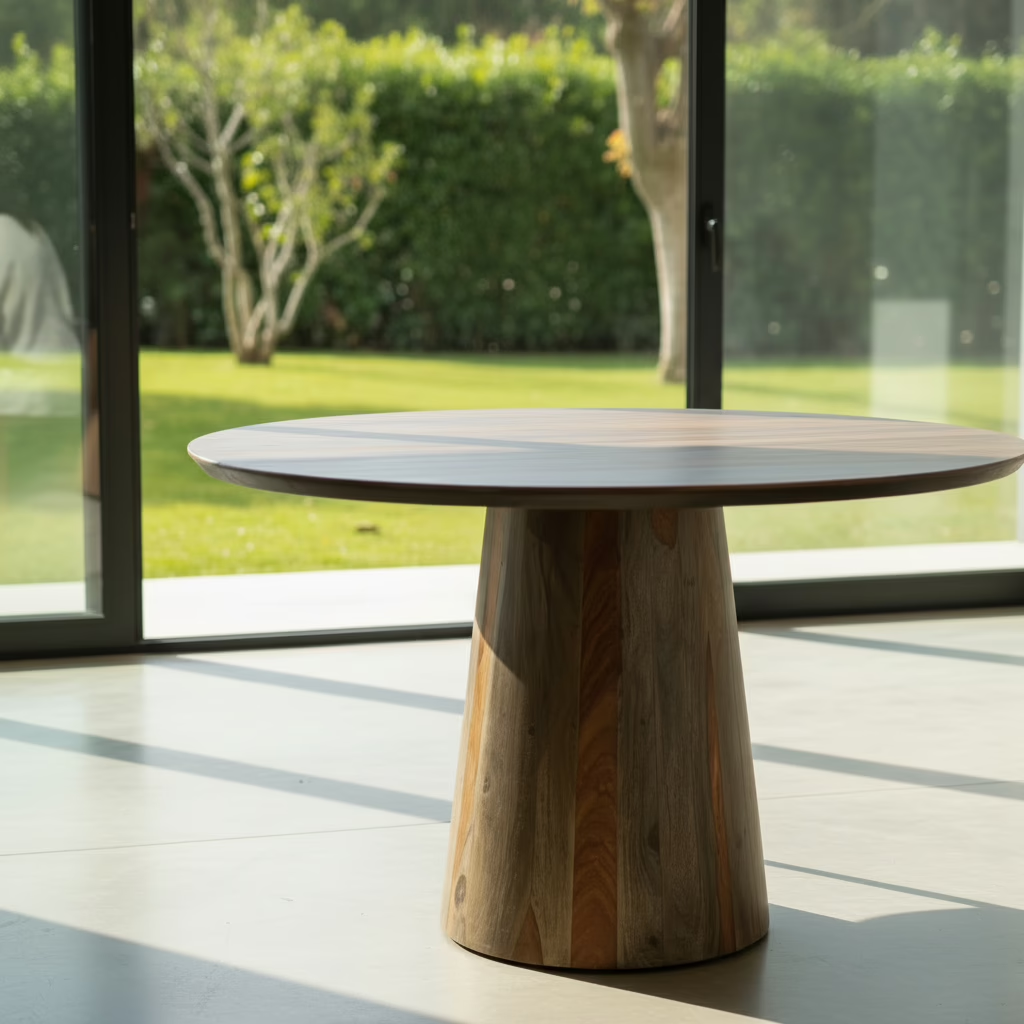
The pedestal also rewards closer inspection. It is formed from individually joined vertical rosewood staves rather than presented as a smooth, anonymous cylinder. Each stave introduces a slight change in grain, tone, and reflected light. As daylight moves across the room, the pedestal gains a subtle rhythm that would disappear beneath paint or uniform veneer.
The wood itself is essential to the effect.
Indian rosewood is a dense hardwood with the strength to hold clean profiles and resist the soft compression that can gradually blur edges in less substantial materials. Look closely at the softened perimeter of the tabletop. The transition remains precise because the material supports it. Design and wood species are working together rather than independently.
The walnut gray finish allows that structure to remain visible. Darker lines pass through warmer areas of grain, and no two boards resolve in exactly the same way. Variation is not treated as a defect to be eliminated. It is the evidence that the Round Pedestal Dining Table is made from genuine solid wood.
Its circular plan changes the dining experience as clearly as it changes the silhouette.
A rectangular table tends to establish ends. A circle removes that hierarchy. Every seat faces the center from a comparable position, allowing conversation to travel naturally around the surface. The form feels inclusive because no guest is placed at the edge of the group.
The pedestal improves that experience beneath the tabletop. Four corner legs define fixed seating zones and can interfere with knees or chair placement. A Round Pedestal Dining Table concentrates support at the center, allowing chairs to move more freely when an additional place setting is needed.
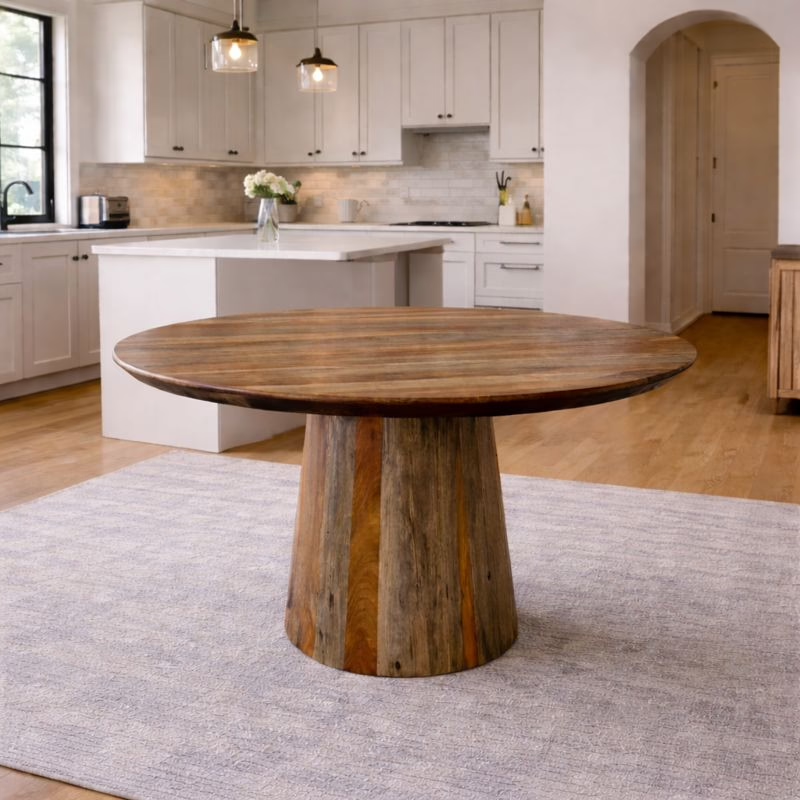
At 51 inches round, the Malone feels generous without requiring the footprint of a larger rectangular table. Four chairs have comfortable everyday spacing, while six can gather for dinners, celebrations, or longer evenings without changing the essential balance of the room.
Ownership reveals details that a single photograph cannot.
Morning light separates the vertical staves. Evening light deepens the walnut gray finish. A chair moved slightly off center does not disturb the composition because the base remains visually complete from every direction. The softened edge becomes familiar beneath the hand, while the solid rosewood gives the table a reassuring permanence.
A well designed Round Pedestal Dining Table should do more than solve seating. It should make circulation easier, preserve visual floor space, and create a center that feels natural within the room. The Malone does this without applied decoration or a form shaped for short term novelty.
Its distinction comes from resolution.
The top is substantial but does not appear cumbersome. The pedestal is broad enough to feel secure but tapered enough to preserve openness. The grain supplies movement, while the circular geometry supplies calm.
Furniture built around decoration may depend on a particular moment in style. The Malone depends on proportion, material, and use. Those qualities become more convincing with time, not less.
Craftsmanship in Every Detail
The Malone is handcrafted in India from solid Indian rosewood selected for its density, stability, and expressive grain. The drum pedestal is assembled from individual vertical staves that must remain aligned as the circumference gradually narrows toward the floor.
That construction requires consistency. Uneven spacing or poorly fitted boards would interrupt the pedestal’s vertical rhythm and become visible from across the room. Here, craftsmanship can be read directly in the continuous transition of the form.
The tabletop receives a softened edge that alters the path of light across its perimeter. Instead of presenting the full thickness as a blunt vertical face, the profile recedes, creating a narrow band of shadow beneath the surface. That shadow is responsible for much of the top’s apparent lightness.
Concealed steel reinforcement beneath the tabletop supports long term stability without interrupting the table’s clean silhouette. The top and pedestal are constructed as two pieces, allowing practical installation while preserving the visual simplicity of the finished form.
Nothing is added merely to signal craftsmanship. It is visible in alignment, shaping, material selection, and control.
A Closer Look
Stand beside the Malone and focus on the thin shadow beneath the tabletop edge.
That line separates the visible upper surface from the full thickness below it. The eye reads the brighter upper plane first, causing the darker underside to recede. A full slab of rosewood therefore appears slimmer than its actual dimension.
This is an important lesson in furniture design: dimensions describe physical size, but profiles determine how that size is experienced.
The same principle appears in the pedestal. Its widest point supports the top, while its narrower footprint exposes more surrounding floor. The Round Pedestal Dining Table remains substantial, yet the room continues to feel open around it.
Dimensions & Specifications
Overall Size
51 Inches Round × 30 Inches High
Why This Size Works
A 51″ Round Pedestal Dining Table comfortably seats four people for everyday meals and can accommodate up to six guests when needed. Its circular footprint works especially well in square dining rooms, breakfast areas, open concept interiors, and spaces where easier circulation is important.
Because the support is concentrated at the center, chairs are not restricted by corner legs. This allows seating positions to shift slightly without placing a guest directly against the table’s structure.
What It Is Made Of
- Solid Indian rosewood
- Concealed steel reinforcement beneath the tabletop
- Solid hardwood pedestal construction
Finish
Hand applied walnut gray finish.
Color
Warm walnut gray with natural tonal and grain variation.
Crafted
Handcrafted in India.
Construction
- 1.5 inch thick solid wood tabletop
- Tapered drum pedestal
- Individually joined vertical rosewood staves
- Steel reinforced underside
- Two piece construction
Seating
- Comfortably seats four
- Accommodates up to six guests
Best For
- Dining Rooms
- Breakfast Rooms
- Open Concept Homes
- Organic Modern Interiors
- Contemporary Interiors
- Transitional Homes
- Condominiums
- Design Focused Spaces
This Round Pedestal Dining Table balances seating capacity with a manageable footprint, making it suitable for both everyday dining and occasional entertaining.
Styling Suggestions
A Round Pedestal Dining Table is strongest when the room preserves the openness created beneath its circular top. Choose chairs with exposed legs, open backs, or restrained upholstery so the pedestal remains visible rather than enclosed by surrounding visual weight.
Chair shape can either repeat or contrast the table’s geometry. Curved backs reinforce the circular composition and create a softer room. More linear chairs introduce tension and give the setting a sharper contemporary edge. In either direction, keep chair scale controlled so the 51 inch top does not feel crowded.
Use an area rug large enough for all chair legs to remain on the rug when the seats are pulled back. A rug that ends too close to the tabletop visually compresses the dining area. Extending the floor plane beyond the chairs gives the table and seating enough space to read as one complete composition.
Center a pendant or chandelier over the pedestal rather than estimating from a nearby wall. Aligning the lighting with the structural center reinforces the symmetry of the Round Pedestal Dining Table and creates a more intentional relationship between the ceiling and floor planes.
Natural linen, honed stone, aged brass, hand thrown ceramics, and restrained greenery complement the walnut gray finish without competing with its grain. Avoid an oversized centerpiece. The circular top already creates a strong center, so a low vessel or compact grouping is usually sufficient.
Why Home Source Furniture
Since 1993, Home Source Furniture has curated handcrafted furnishings selected for authentic materials, enduring construction, and design that remains relevant beyond a single trend cycle. Our collection emphasizes solid woods, artisan finishes, natural variation, and furniture intended to become more personal through use.
Visit one of our Houston showrooms to experience the Malone Round Pedestal Dining Table in person. Move around the pedestal, compare the grain from different angles, and study how the eased tabletop profile changes its apparent thickness. These qualities become clearer through movement, touch, and changing light than through a single image.
Experience It in Person
Post Oak Showroom
1705 Post Oak Blvd.
Houston, TX 77056
Warehouse Showroom
1055 West Sam Houston Parkway North, Suite 113
Houston, TX 77043
Showroom Hours
Monday through Saturday
10:00 AM to 6:00 PM
Sunday
12:00 PM to 6:00 PM
Product FAQs
What distinguishes the Malone Round Pedestal Dining Table?
The Malone combines a substantial solid Indian rosewood top with a tapered drum pedestal assembled from vertical wood staves. Its eased tabletop edge creates a slimmer visual profile while preserving the strength and presence of the full 1.5 inch hardwood surface.
Is the Malone made from solid wood?
Yes. The tabletop and pedestal are made from solid Indian rosewood. Natural differences in grain, color, and tone are expected and make every table distinct.
Why choose a Round Pedestal Dining Table instead of a four leg table?
A central pedestal provides more flexible chair placement and removes corner legs that can limit legroom. The circular form also gives every seat a comparable relationship to the center of the table.
How many people can sit around the Malone?
The table comfortably seats four people for everyday use and can accommodate up to six guests. Actual comfort will depend on the width and design of the selected dining chairs.
Is a Round Pedestal Dining Table suitable for a smaller dining room?
Yes. Its 51 inch circular footprint and exposed floor area can help a dining room feel more open than a similarly sized table with four visually prominent legs. Always confirm the room allows sufficient clearance for chairs and circulation.
How much space should be left around the table?
Allow approximately 36 inches between the tabletop and nearby walls or furniture whenever possible. More clearance may be preferred in primary walkways or behind frequently used chairs.
Why is Indian rosewood valued for dining furniture?
Indian rosewood is known for its density, durability, dimensional stability, and expressive grain. Its strength also allows clean shaping and crisp surface transitions that support the Malone’s refined edge profile.
Does the table require assembly?
Yes. The Round Pedestal Dining Table is constructed in two pieces. Installation requires securing the pedestal to the underside of the tabletop according to the included hardware and instructions.
Will every Malone table look exactly the same?
No. Solid Indian rosewood naturally varies in grain direction, color, and tonal movement. These differences are part of the material and ensure each table has its own character.
How should the walnut gray finish be maintained?
Dust with a soft, dry cloth and wipe spills promptly. Use coasters, placemats, and trivets to protect the surface from moisture, heat, and abrasion. Avoid harsh chemicals, silicone based polishes, and prolonged exposure to direct sunlight.
What interior styles work with this Round Pedestal Dining Table?
The Malone works especially well in organic modern, contemporary, transitional, and collected interiors. Its simple circular geometry provides versatility, while the rosewood grain and walnut gray finish add warmth and material depth.