



Description
Some reclaimed furniture begins with old lumber. The Heritage Hand Carved Teak Architectural Bookcase begins with something more specific: an antique architectural element that already had a design, a purpose and a visual identity before becoming part of this cabinet.
The bookcase itself is newly constructed in reclaimed teak. Its defining front surround is an authentic reclaimed architectural component, preserved rather than reduced to raw material and incorporated into the new case as a complete decorative composition.
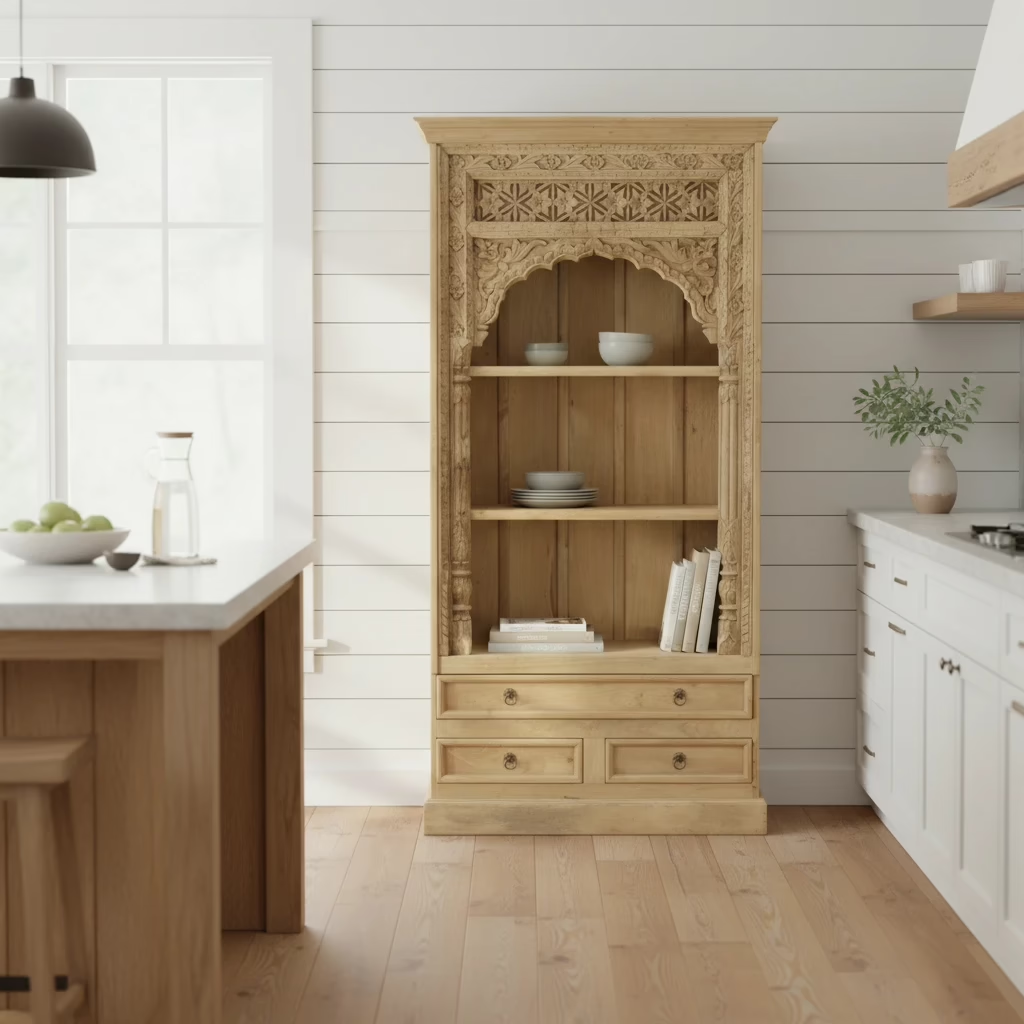
From across the room, the arch establishes the piece.
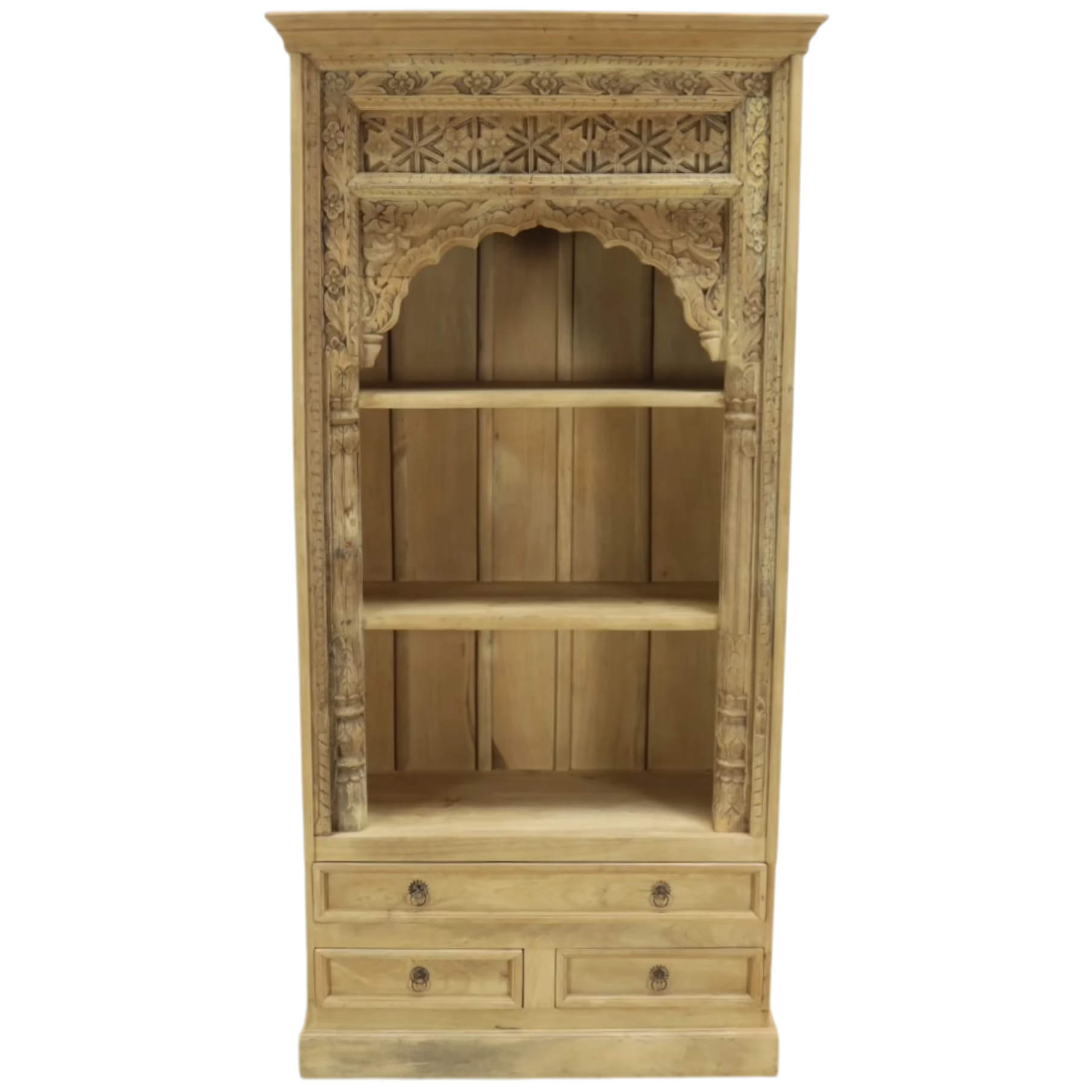
A scalloped opening frames the upper shelves while layers of floral, foliate and geometric hand carving travel around it. Above the arch, a narrow geometric panel introduces a tighter rhythm of interlocking shapes. Floral carving continues through the outer borders, while slender carved vertical members extend down either side of the opening.
The result is not simply a bookcase decorated with carving.
The carving becomes the architecture of the bookcase.
Reclaimed Architecture, Reimagined
The most important distinction in this Hand Carved Teak Architectural Bookcase is the relationship between the reclaimed element and the new construction.
The older component is not being imitated.
It is being reused.
Its original building, exact age, geographic origin and previous architectural function are not being claimed without documentation, but its antique and reclaimed status is established. That allows the piece to tell a much more precise story than generic “vintage-inspired” furniture.
The new teak case gives the carving another practical life without trying to erase evidence of the first one.
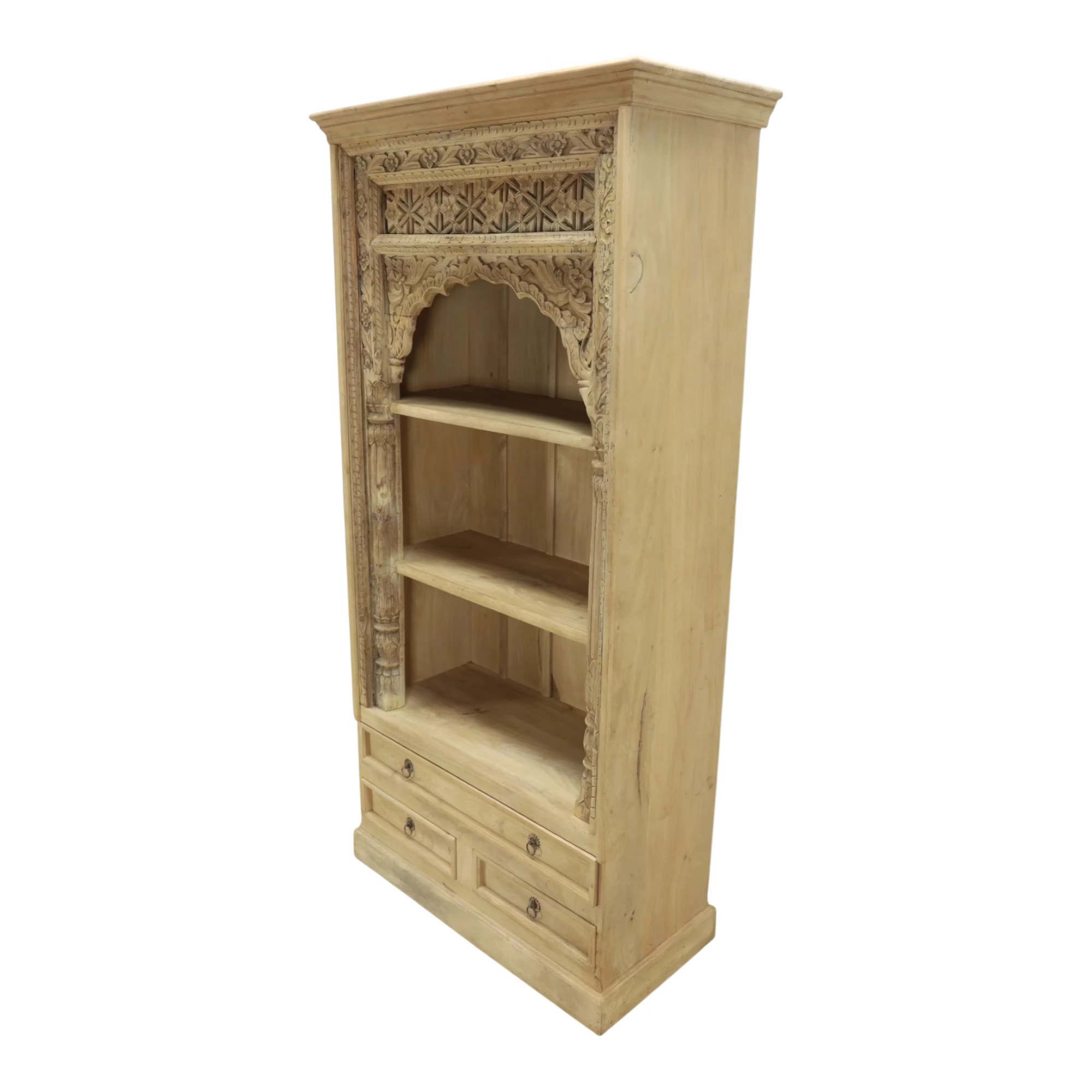
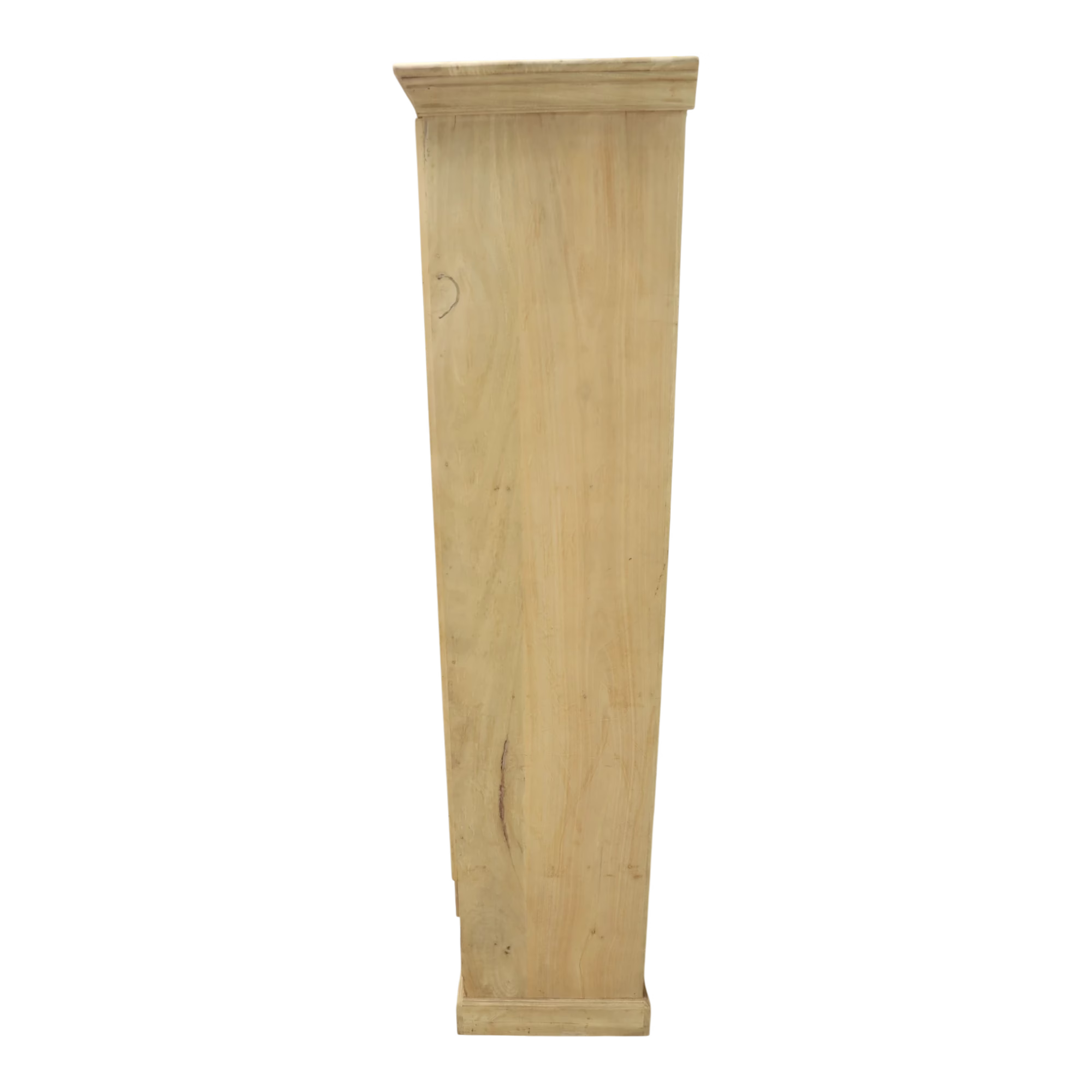
Look at the contrast between the façade and the side panels. The front is richly worked. The side of the cabinet is broad, quiet and largely unornamented.
That restraint is important.
If the entire cabinet repeated the intensity of the carving, the reclaimed element would lose its visual hierarchy. Instead, the simpler teak construction acts almost like a wall around an architectural opening.
Hand-Carved Depth
The Hand Carved Teak Architectural Bookcase changes character as you move closer to it.
From several feet away, the silhouette is tall and balanced.
At closer range, the individual layers become more apparent.
The upper section combines floral borders with a geometric lattice-like carved panel. Beneath it, the arch transitions into scrolling botanical relief. The vertical surrounds continue the hand-carved language downward in a narrower format.
Light does much of the work.
Projected areas catch illumination while recessed carving holds shadow. The façade therefore gains dimension without relying on contrasting finishes or added materials.
This is one reason deeply carved furniture can remain visually interesting even in a restrained palette: depth itself creates pattern.
A Calm Interior Behind an Elaborate Frame
Inside the carved surround, the shelving becomes deliberately simpler.
Three open display levels are backed by vertical teak boards. Their broad surfaces provide visual breathing room against the detail of the antique carving.
That contrast makes the bookcase easier to style.
Books can be arranged in loose groups rather than filling every shelf edge to edge. Pottery, sculpture, ceramics and collected objects can stand alone without competing with a heavily patterned interior.
The Hand Carved Teak Architectural Bookcase is therefore capable of holding substantial collections, but it does not need to be full to look complete.
In many rooms, fewer objects will make the cabinet stronger.
Concealed Storage Below
The lower portion adds a practical counterpoint to the open display area.
One wide drawer sits directly beneath the shelves, with two smaller drawers below. Metal ring pulls introduce darker points of contrast against the lighter wood.
This arrangement separates what deserves display from what simply needs storage.
Office supplies, household accessories, table linens or smaller objects can be kept out of sight while the open shelves remain composed.
The distinction is especially useful in a tall cabinet because it prevents the entire piece from becoming visually busy.
Why the Proportions Matter
At 40″ wide and 82″ high, the Hand Carved Teak Architectural Bookcase creates vertical presence without requiring a broad wall.
Its proportions are narrow enough for spaces where a large horizontal storage piece would feel excessive, yet tall enough to establish real architectural weight.
The 19″ depth provides meaningful shelf capacity while maintaining a relatively controlled footprint.
That combination makes it appropriate for spaces such as:
- Home offices
- Dining rooms
- Living rooms
- Libraries
- Kitchens with available freestanding wall space
- Hallways with sufficient circulation
- Narrow wall sections between larger architectural features
The tall silhouette is especially effective where a room needs something to carry the eye upward.
The Difference Between Reclaimed Wood and Reclaimed Design
One of the most important things about this Hand Carved Teak Architectural Bookcase is that the reclaimed component carries more than age.
It carries design.
Reclaimed lumber may preserve saw marks, knots, old holes or color variation. A reclaimed architectural element can preserve an earlier craftsman’s decisions about proportion, carving, ornament and composition.
That distinction matters here.
The carved surround was already conceived as something meant to frame an opening. In its new life, it frames another one.
Its use has changed, but its visual logic survives.
That continuity is what gives the piece authenticity.
DIMENSIONS & SPECIFICATIONS
Overall Dimensions: 40″w × 19″d × 82″h
Product Type: Tall Open Bookcase / Display Cabinet
Primary Material: Teak wood
Reclaimed Component: Authentic antique hand-carved architectural element incorporated into the front surround
Carving: Hand carved
Visible Decorative Details:
- Scalloped arch
- Floral and foliate relief
- Geometric upper panel
- Layered carved borders
- Carved vertical framing
Open Storage: Three primary display levels
Drawer Storage: Three drawers
- One wide upper drawer
- Two smaller lower drawers
Hardware: Metal ring pulls
Back: Vertical wood-board construction
Finish / Appearance: Light natural teak coloration with visible material variation
WHY THIS SIZE WORKS
At 40″w × 19″d × 82″h, the Hand Carved Teak Architectural Bookcase uses height more aggressively than width.
That makes it useful where significant visual presence is wanted without sacrificing a long stretch of wall.
STYLING SUGGESTIONS
The Hand Carved Teak Architectural Bookcase already carries substantial surface detail, so the strongest styling approach is usually restraint.
Against warm white, plaster, soft taupe, muted olive, charcoal or limewash walls, the carved relief remains easy to read.
Living Room
Use a mix of books, pottery and a few sculptural objects. Leave portions of each shelf open rather than filling the entire width.
Home Office
Pair the bookcase with a simple wood or metal desk. Use the shelves for books and objects while the lower drawers hold supplies that do not need to remain visible.
Dining Room
Ceramics, serving pieces, decorative vessels and collected objects work especially well against the quieter interior shelving.
Kitchen
Where freestanding space permits, the cabinet can function as an open display piece for pottery, cookbooks and serving pieces.
Designer Guidance
Avoid arranging every shelf at the same visual density.
A large object on one shelf, books on another and intentional empty space elsewhere will usually create a stronger composition.
The carving already supplies the rhythm.
WHY HOME SOURCE FURNITURE
Home Source Furniture has collected distinctive furniture for Houston homes since 1993, with a longstanding interest in natural materials, craftsmanship and pieces that offer something beyond mass-produced repetition.
The Heritage Hand Carved Teak Architectural Bookcase represents a particularly meaningful form of reuse.
Rather than taking an old architectural component apart and reducing it to reclaimed lumber, the carved element remains recognizable.
Its pattern, relief and craftsmanship survive.
That transformation is central to why we selected the piece.
It is not only reclaimed wood.
It is reclaimed design.
EXPERIENCE IT IN PERSON
The Hand Carved Teak Architectural Bookcase is a piece that benefits from being viewed at full scale.
Photographs can show pattern, but they do not fully communicate the depth of the carving, the transition between antique and newer material or the vertical presence of an approximately 82-inch cabinet.
Post Oak Showroom
1705 Post Oak Blvd.
Houston, TX 77056
Warehouse Showroom
1055 West Sam Houston Parkway North #113
Houston, TX 77043
Showroom Hours
Monday–Saturday: 10 AM–6 PM
Sunday: 12 PM–6 PM
Local in-home delivery is available throughout the greater Houston area. Nationwide shipping is also available.
FREQUENTLY ASKED QUESTIONS
Is the carving handmade?
Yes. The reclaimed architectural element is hand carved.
How much storage does it provide?
The cabinet includes three primary open display levels plus one wide lower drawer and two smaller drawers below it.
Why are there variations and marks in the carving?
Reclaimed antique material may show worn edges, old fastening points, small cracks, tonal variation and other evidence of earlier use. Those characteristics are part of the element’s history.
Can it work in a contemporary interior?
Yes. The contrast between intricate antique carving and cleaner contemporary furnishings can make the reclaimed architectural element even more prominent.
What should I put on the shelves?
Books, ceramics, sculptural objects, pottery and collected pieces work particularly well. Because the front is already highly detailed, restrained shelf styling usually creates the strongest result.
How should I care for the reclaimed carving?
Dust gently with a soft dry cloth or soft brush. Avoid abrasive cleaners, harsh chemicals and prolonged moisture. Do not aggressively clean away age-related surface character.