Description
The first thing you notice is the pattern.
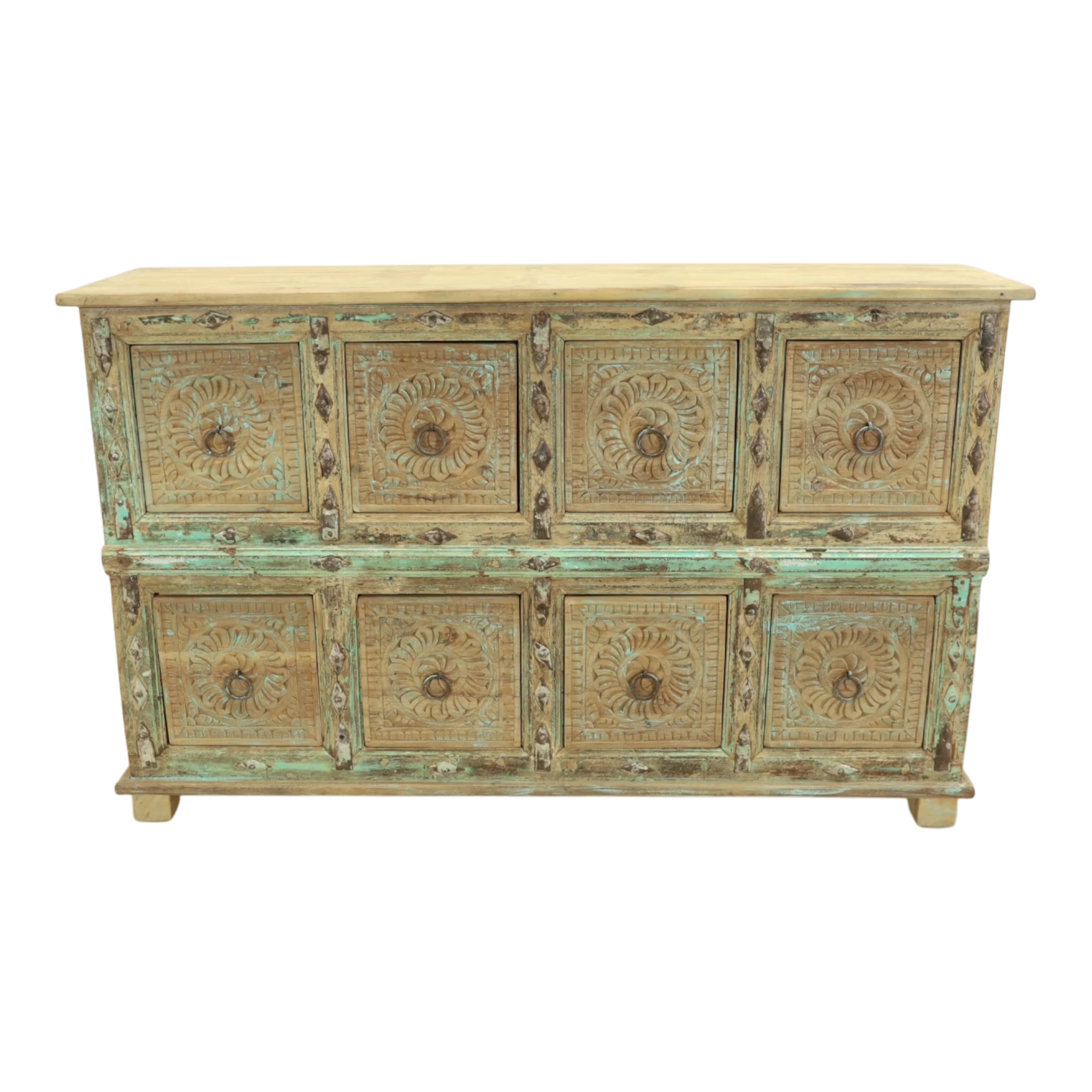
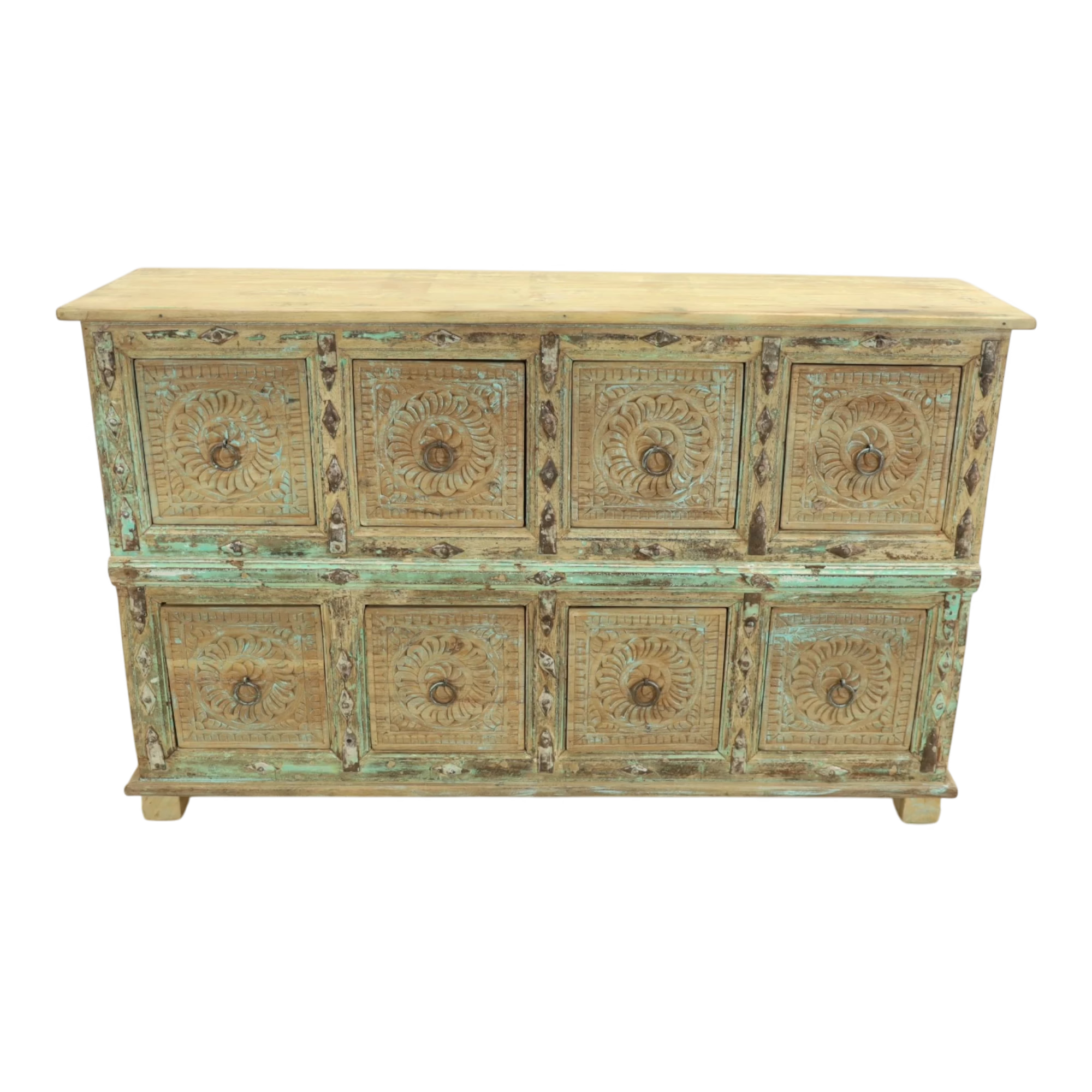
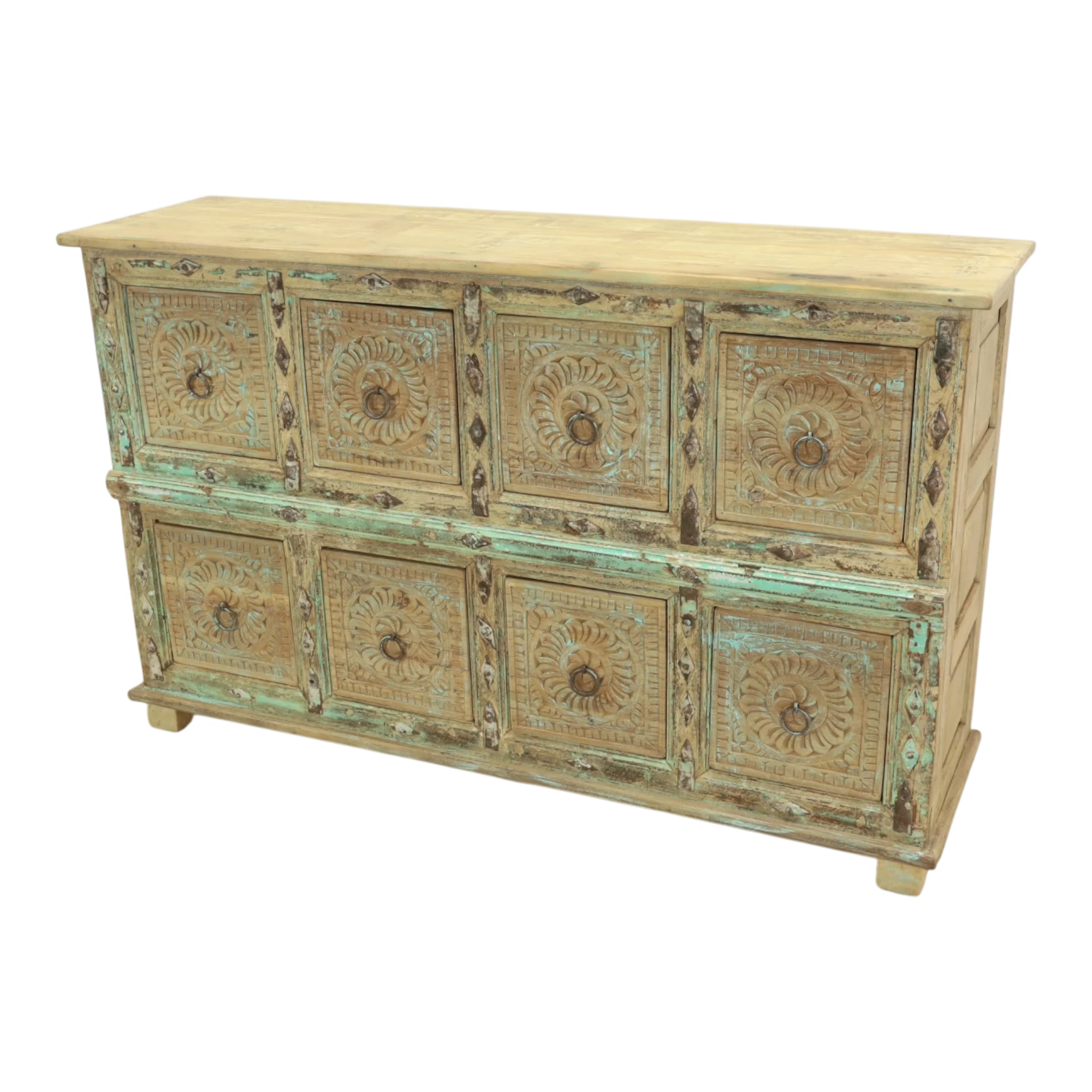
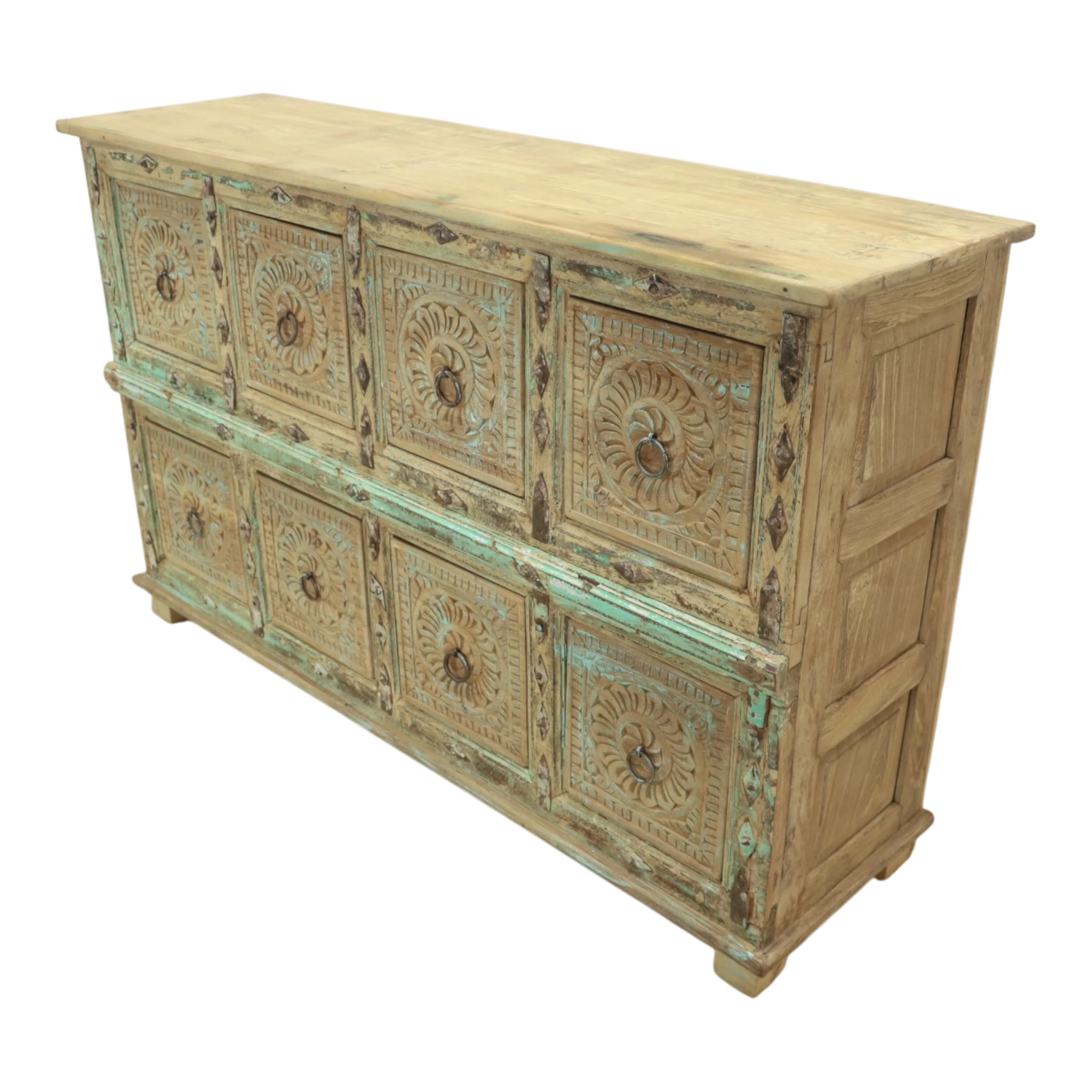
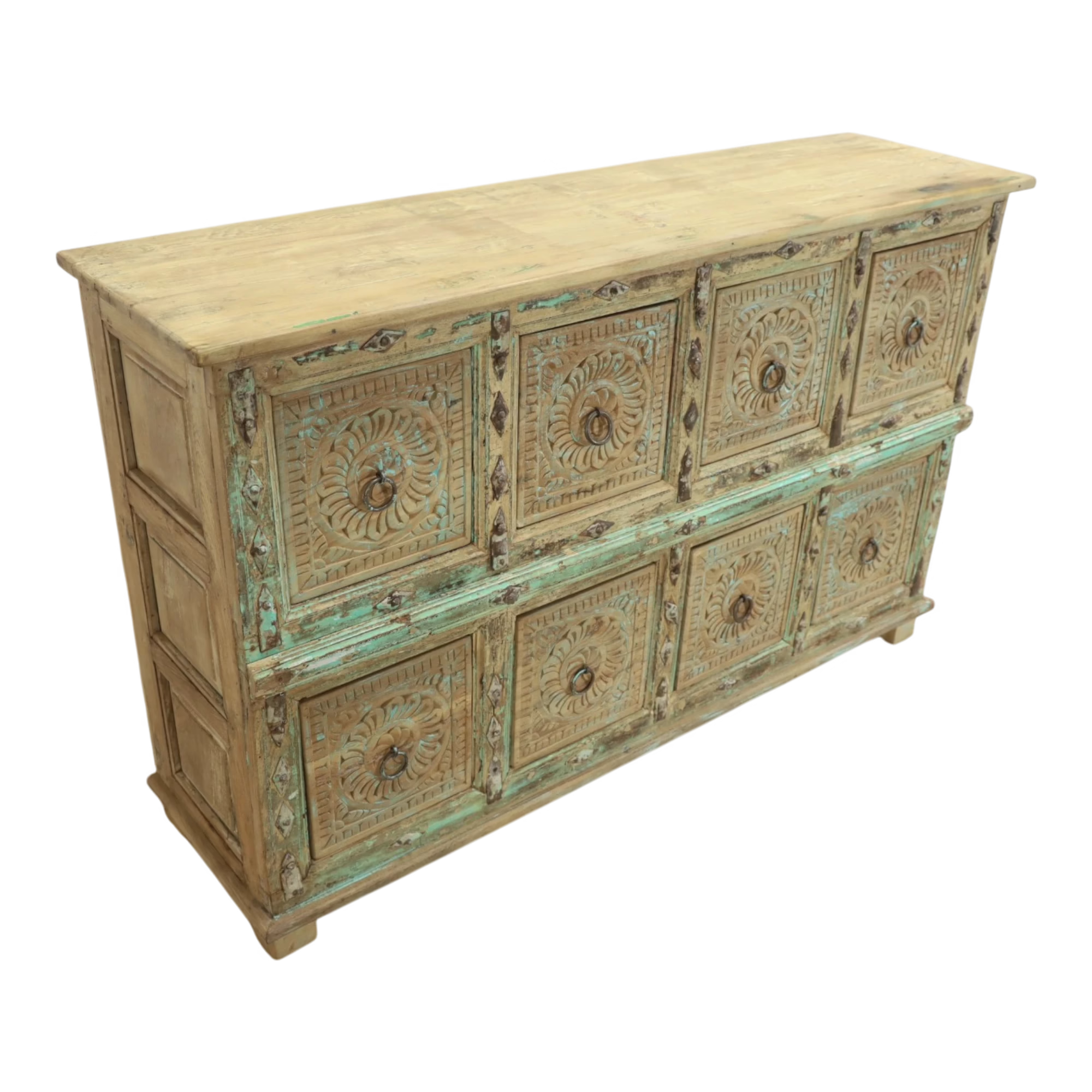
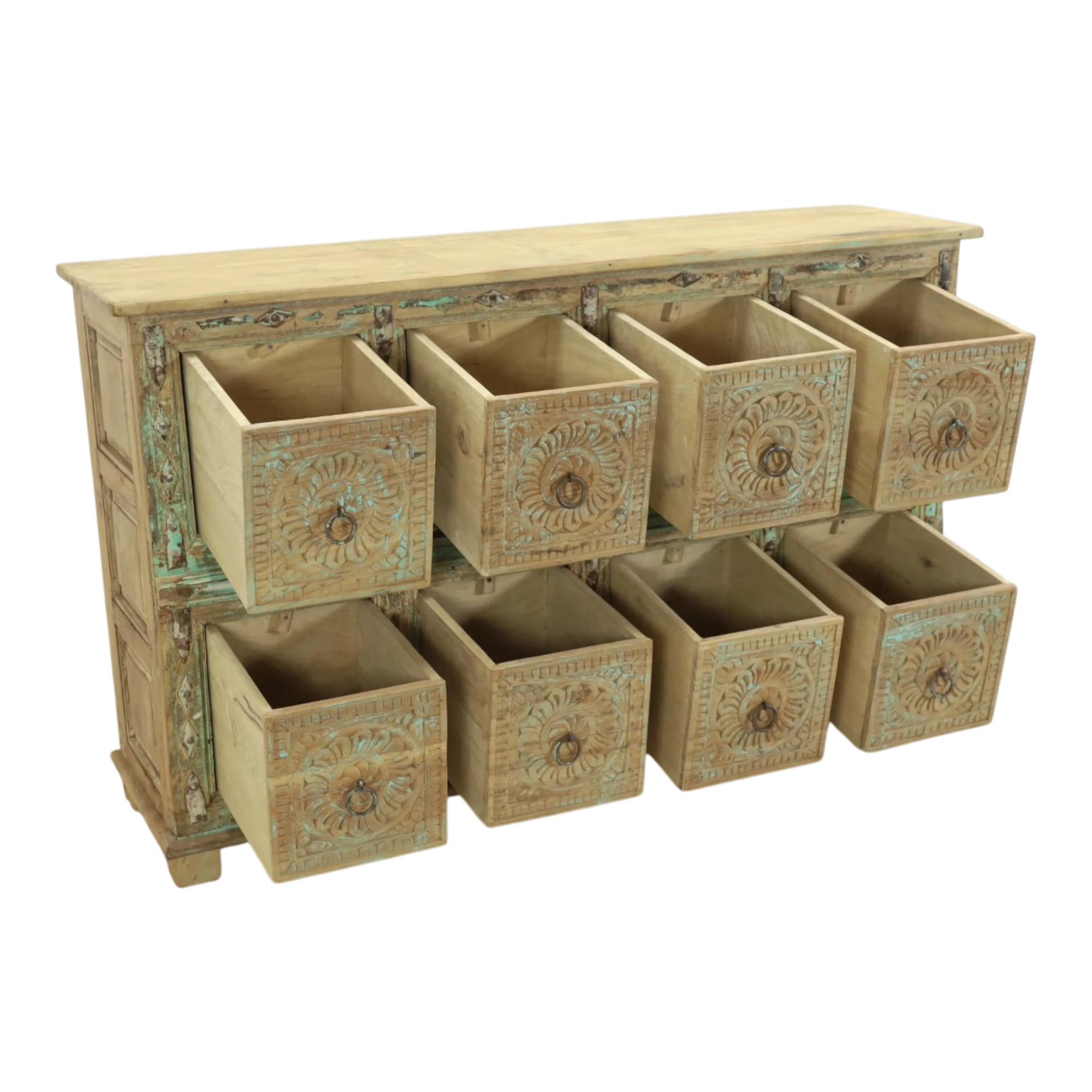
Eight square drawer fronts stretch across the façade of this hand carved reclaimed wood sideboard, each centered by a deeply worked radial rosette and a metal ring pull. Look closer and the repetition begins to break apart: reclaimed teak and mango wood change subtly from drawer to drawer, darker surface marks interrupt the lighter timber, and fragments of blue-green color remain across portions of the carved front.
That tension between order and irregularity is what gives the piece its character.
Eight Drawers Hidden Inside the Pattern
From across the room, the front can initially look like a series of decorative architectural panels.
Each carved square is actually an individual drawer.
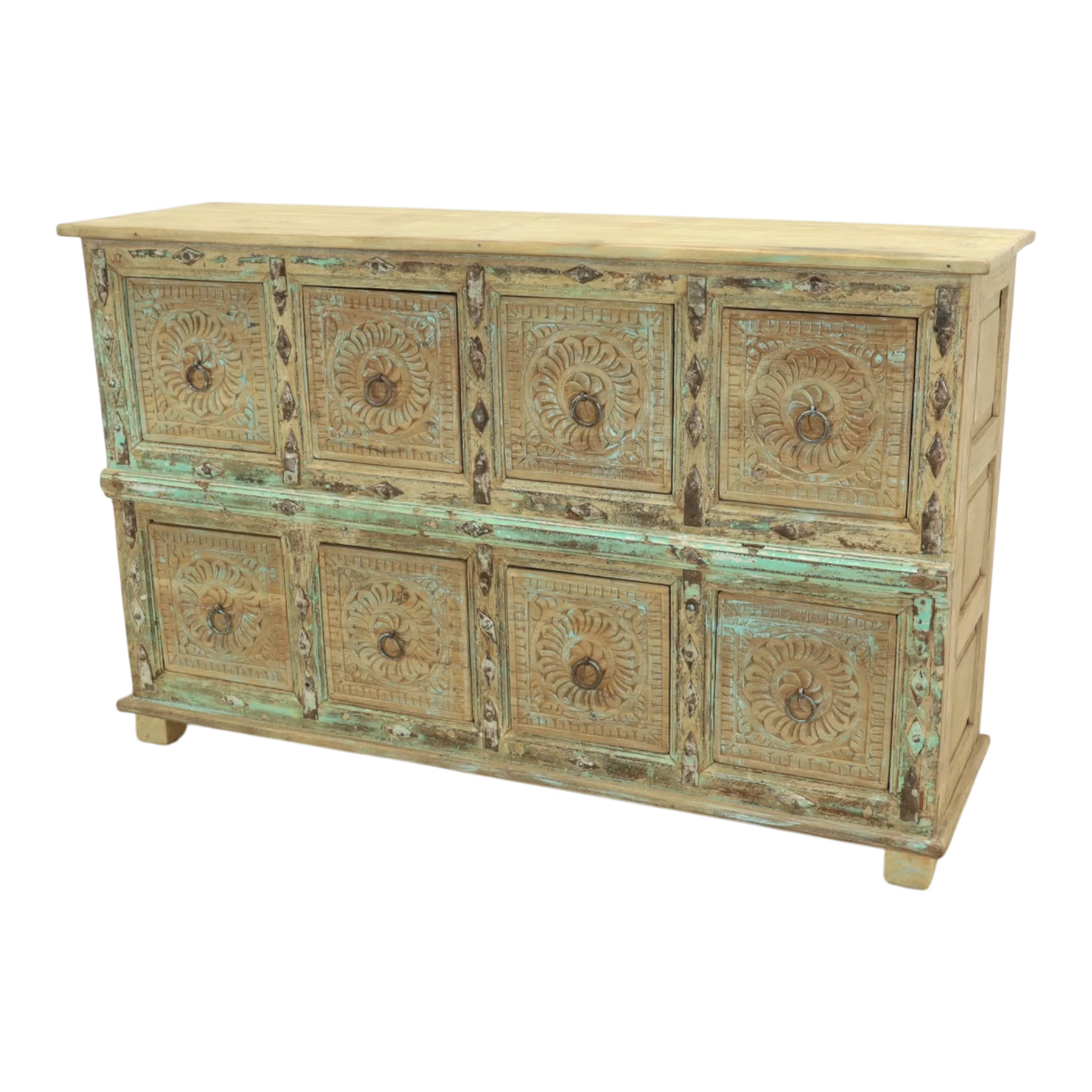
Four drawers run across the upper row and four across the lower row, creating eight separate storage compartments rather than one large cabinet interior. The open-drawer view makes the construction especially clear: the rosette panels are not applied decoration hiding doors; they are the functional fronts of deep individual drawer boxes.
That makes this hand carved reclaimed wood sideboard unusually useful for organizing smaller categories of household items separately.
In a dining room, the drawers can divide linens, flatware, serving accessories and entertaining pieces.
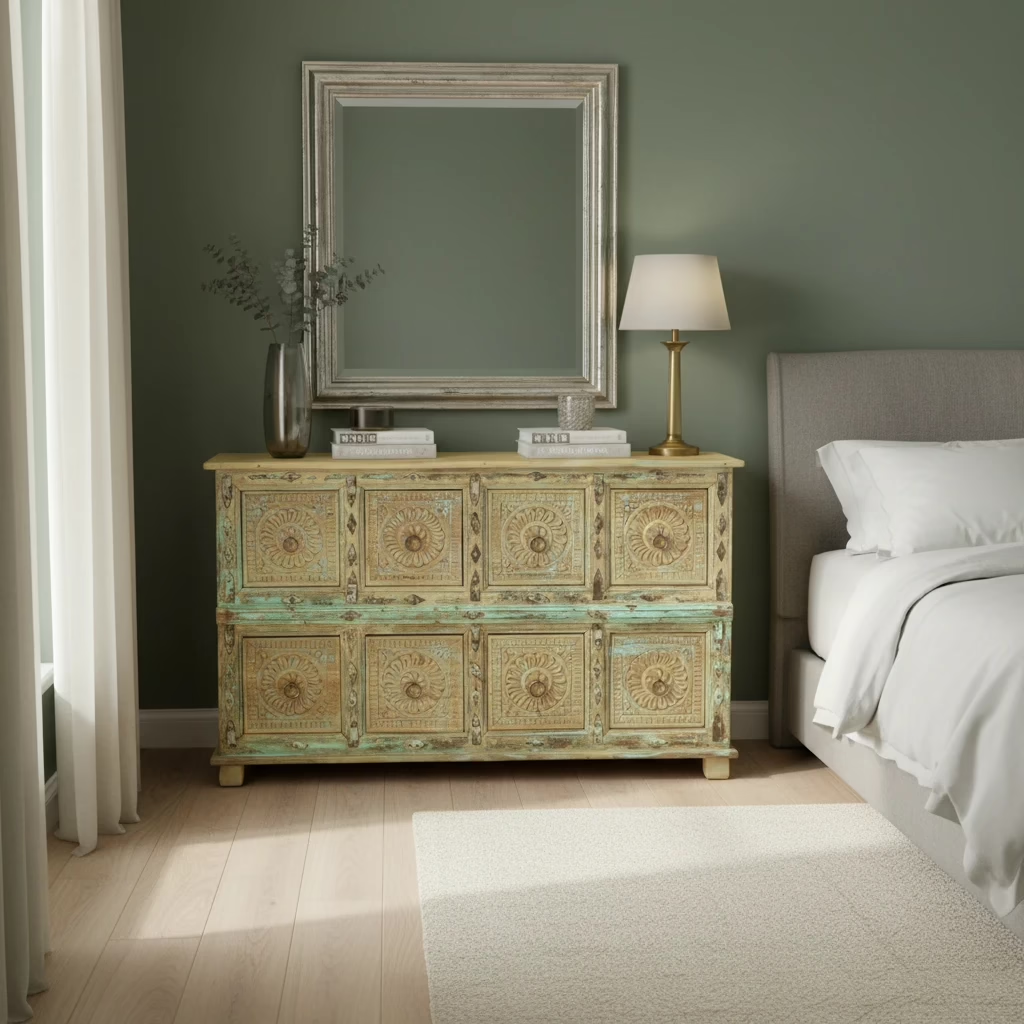
In a bedroom, they can provide dresser-style storage without requiring the depth of a conventional large dresser.
In a home office, they can separate documents, supplies and everyday objects.
The decorative structure and storage system are the same thing.
Hand Carving Creates the Visual Rhythm
Each drawer front centers on a circular rosette whose carved segments radiate outward from the ring pull.
The design repeats eight times, but the reclaimed material prevents the composition from feeling mechanically uniform.
Notice how the carving changes as light moves across the front.
Raised edges catch light.
Recessed cuts become darker.
The metal rings create another circular layer at the center of each motif.
This is why carved furniture can create pattern without relying on printed ornament or multiple materials. The pattern comes from depth.
On this piece, the surviving blue-green coloration adds a second layer of contrast.
Reclaimed Teak and Mango Wood
The hand carved reclaimed wood sideboard is handcrafted from reclaimed teak and mango wood.
Reclaimed material brings natural variation that newly milled lumber does not reproduce in exactly the same way. Grain direction, tone, worn edges, small marks, holes, surface abrasion and color remnants may differ from one section to another.
Those characteristics are part of the material.
They are not intended to disappear beneath a perfectly uniform finish.
The cabinet therefore reads differently at a distance and up close.
Across the room, the eight-drawer grid dominates.
Closer in, the reclaimed surface begins to take over.
Blue-Green Surface Character
One of the most memorable details is the irregular blue-green coloration visible across portions of the front framework and carved drawers.
It does not cover the cabinet uniformly.
Instead, small areas of color remain among lighter natural wood, darker surface variation and carved recesses.
Because the precise age and original application of this coloration are not documented, it is best understood simply as visible blue-green surface character within the reclaimed façade.
That restraint matters.
The piece has color without becoming a brightly painted cabinet.
Ring Pulls Complete the Motif
Each drawer is centered with a metal ring pull.
The hardware works especially well here because the circular ring echoes the radial geometry of the carving instead of interrupting it.
Additional darker metal accents appear throughout the surrounding front framework.
Together, those details give the lighter reclaimed timber small points of contrast and reinforce the cabinet’s handcrafted appearance.
A Detailed Front, Quieter Sides
Move around the piece and its visual hierarchy becomes clearer.
The front carries the carving, color variation, metal accents and eight repeating drawer modules.
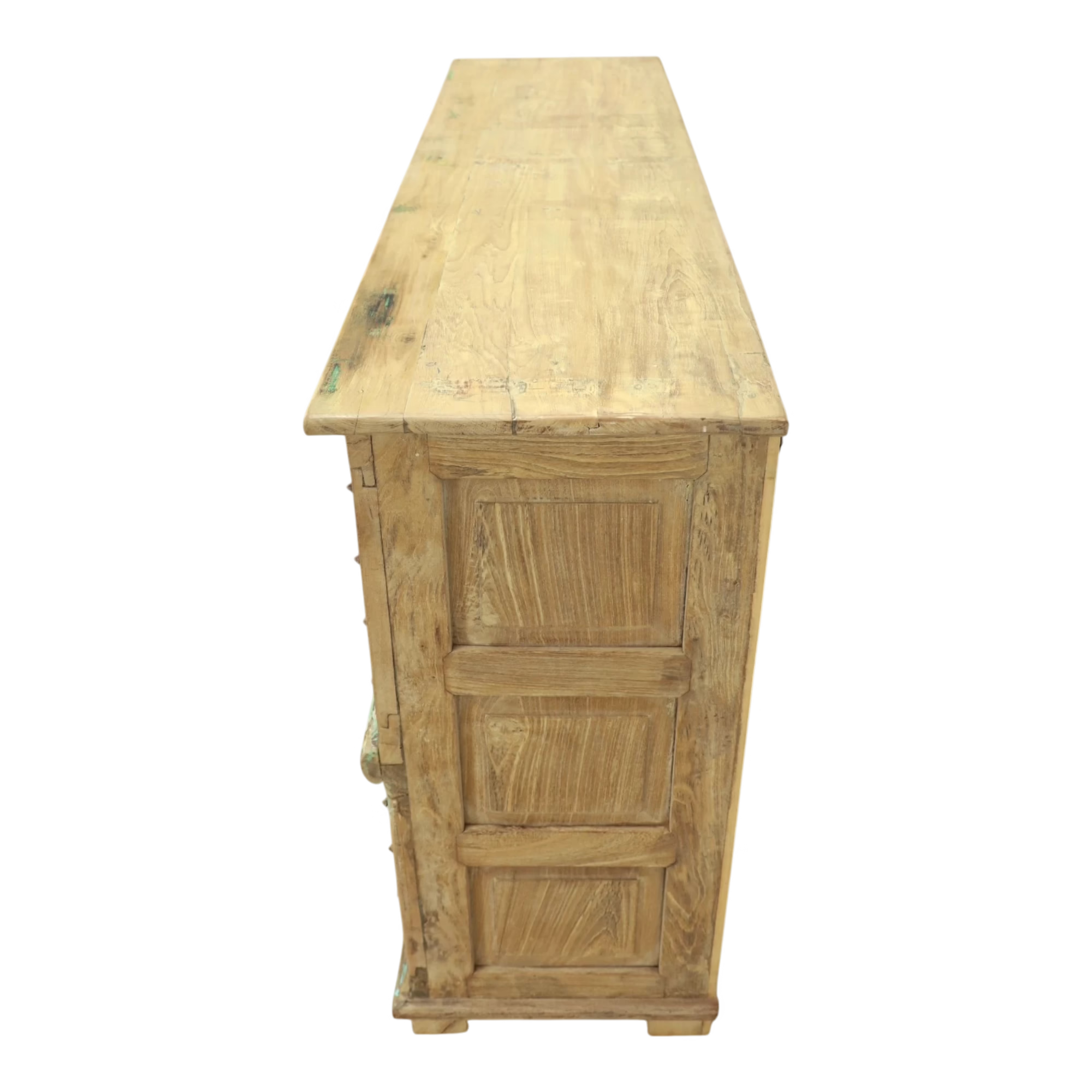
The paneled sides are much quieter.
That difference is important.
If every surface carried the same amount of carving, the cabinet could become visually overwhelming. The simpler side panels allow the ornate façade to remain the focal point while making the piece easier to place beside cleaner modern furnishings.
The side profile also reveals one of the cabinet’s strongest practical advantages: its depth.
Only 17 Inches Deep
At 62″W × 17″D × 39″H, this hand carved reclaimed wood sideboard has a broad storage footprint without extending unusually far into the room.
That 17-inch depth makes it especially useful where floor circulation matters.
It can work well in:
Dining rooms
Bedrooms
Living rooms
Home offices
Entry areas
Breakfast rooms
Wide hallways
Open-plan spaces
The cabinet provides eight individual storage drawers while remaining shallower than many traditional dressers and storage cabinets.
That proportion is one of its most practical strengths.
A Sideboard That Can Work Beyond the Dining Room
The sideboard category describes its basic form, but it does not define where the piece must live.
In a bedroom, the eight drawers provide organized dresser-style storage, particularly where a taller and shallower case piece makes more sense than a deep dresser.
In a living room, the drawers can conceal media accessories, games, documents and household objects.
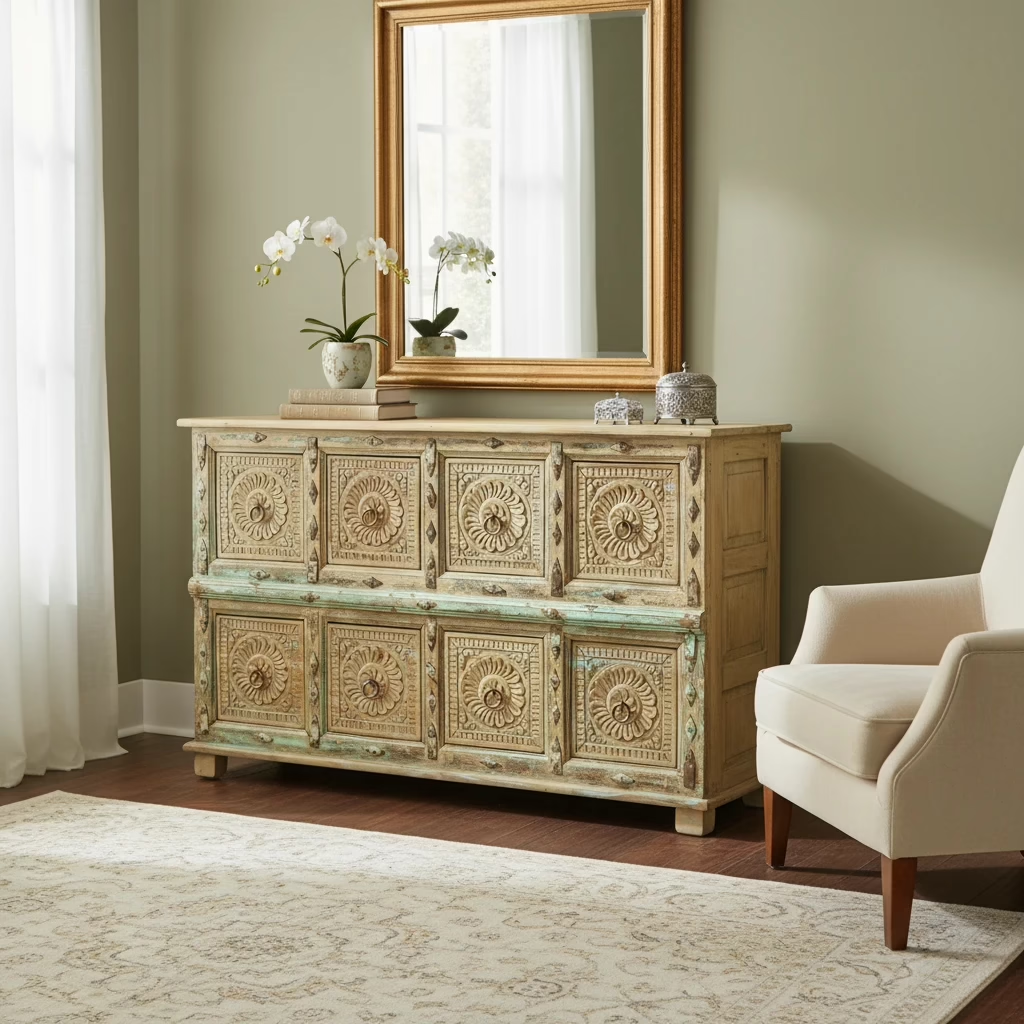
In a dining room, the broad 62-inch top creates space for lamps, serving pieces, artwork or a mirror above.
In an office, the combination of multiple drawers and shallow depth can provide practical storage without dominating the room.
Good furniture becomes more useful when its function is not limited by its category name.
Let the Cabinet Do the Decorating
This sideboard already contains pattern, texture and color.
It does not need a crowded surface.
A large mirror can work beautifully above it because the broad reflective plane provides contrast to the carved façade.
One substantial artwork can do the same.
On top, consider:
A single large ceramic vessel
A pair of simple lamps
A restrained stack of books
A sculptural object
A small grouping of pottery
The hand carved reclaimed wood sideboard is strongest when the surrounding objects leave enough negative space for the front itself to remain visible.
DIMENSIONS & SPECIFICATIONS
Overall Dimensions: 62″W × 17″D × 39″H
Product Type: Sideboard / Storage Cabinet
Storage Configuration: 8 individual drawers
Drawer Layout: 4 upper drawers + 4 lower drawers
Materials: Reclaimed teak and mango wood
Country of Origin: India
Construction: Handcrafted
Carving: Hand-carved drawer fronts
Carved Motif: Repeating radial / rosette design
Hardware: Metal ring pulls and decorative metal accents
Surface Character: Natural reclaimed wood with irregular blue-green / turquoise coloration and visible material variation
Side Construction: Paneled wood sides
Base: Short block feet
Recommended Use: Indoor furniture
Reclaimed Material Characteristics
Because reclaimed teak and mango wood are used, differences in grain, tone, worn edges, marks, small holes, abrasions and surface variation may occur. These characteristics contribute to the individual appearance of each piece.
WHY THIS SIZE WORKS
At 62″W × 17″D × 39″H, the hand carved reclaimed wood sideboard is wide enough to anchor a wall while remaining relatively shallow.
Wall Width
The cabinet itself requires 62 inches of wall width.
For a balanced installation:
74–86 inches of wall width allows approximately 6–12 inches of breathing room on either side.
For a larger composition beneath artwork or a mirror:
86–100 inches of wall width gives the piece more visual space.
Depth and Walking Clearance
Cabinet depth: 17 inches
Recommended clear passage in front:
30 inches minimum
36 inches or more for more comfortable everyday circulation
This means the approximate wall-to-passage requirement is:
47 inches minimum
53 inches for a more comfortable layout
Allow additional space when drawers are open.
Dining Room Placement
If the cabinet sits behind dining chairs, measure circulation with the chairs pulled away from the table—not only when pushed in.
The 17-inch depth can be particularly valuable in dining rooms where a deeper buffet would reduce chair clearance.
Bedroom Placement
The sideboard can provide dresser-style storage, but its 39-inch height makes it taller than many low dressers.
It works especially well where a taller, shallower cabinet fits the room better than a deep conventional dresser.
Top Surface
At 62 inches wide, the top can comfortably anchor:
A large mirror
One substantial artwork
A pair of lamps
A large ceramic vessel
A restrained collection of decorative objects
STYLING SUGGESTIONS
The hand carved reclaimed wood sideboard already carries significant texture and pattern, so simpler surroundings usually make it more effective.
Wall Colors
Especially compatible choices include:
Warm white
Soft plaster
Sage
Olive
Muted clay
Charcoal
Soft gray-beige
Limewash tones
Above the Cabinet
A large mirror provides a quiet visual counterpoint to the detailed front.
Alternatively, choose one substantial artwork rather than a dense gallery arrangement.
Lighting
Simple lamps in ceramic, metal or stone work well because their cleaner shapes do not compete with the carving.
Decorative Objects
Fewer, larger objects are generally more successful than many small accessories.
Consider:
Stone vessels
Hand-thrown ceramics
Brass objects
Large books
Organic sculptural forms
Contemporary Interiors
Do not feel obligated to pair the cabinet only with rustic furniture.
Its reclaimed surface often becomes more interesting beside cleaner contemporary upholstery, simple tables and restrained architecture.
WHY HOME SOURCE FURNITURE
With reclaimed furniture, the word “reclaimed” alone is not enough.
What matters is what can actually be seen and verified: the material, construction, carving, surface variation, hardware and the way those elements have been transformed into functional furniture.
This hand carved reclaimed wood sideboard is a strong example.
Its reclaimed teak and mango wood retain visible variation. Eight individual drawers turn the hand-carved façade into practical storage. Ring pulls sit directly within the carved rosettes rather than competing with them. The blue-green coloration remains irregular rather than covering the piece in a uniform decorative finish.
Home Source Furniture has selected distinctive furniture for Houston homes since 1993, with a particular interest in craftsmanship, natural materials and furniture that reveals how it was made.
This piece earns attention through its details rather than through a generic “rustic” label.
EXPERIENCE IT IN PERSON
The Artisan Hand Carved Reclaimed Wood 8-Drawer Sideboard is especially rewarding to see in person because much of its character comes from texture and variation.
Look closely at:
The depth of the rosette carving
Differences from drawer to drawer
The metal ring pulls
Blue-green surface coloration
Teak and mango wood grain
Worn and darker surface areas
Paneled side construction
The eight individual drawer interiors
The contrast between the ornate front and quiet sides
The cabinet’s relatively shallow 17-inch profile
Post Oak Showroom
1705 Post Oak Blvd.
Houston, TX 77056
Warehouse Showroom
1055 West Sam Houston Parkway North #113
Houston, TX 77043
Hours
Monday–Saturday: 10 AM–6 PM
Sunday: 12 PM–6 PM
Local in-home delivery is available throughout the greater Houston area. Nationwide shipping is also available.
FREQUENTLY ASKED QUESTIONS
What is the Artisan sideboard made from?
The hand carved reclaimed wood sideboard is handcrafted from reclaimed teak and mango wood.
Where is the sideboard made?
It is handcrafted in India.
How many drawers does it have?
The cabinet has eight individual drawers arranged in two rows of four.
Are the drawer fronts hand carved?
Yes. Each drawer front is hand carved with a repeating radial rosette motif.
Will every reclaimed sideboard look exactly the same?
No. Reclaimed teak and mango wood naturally show differences in grain, tone, marks, worn areas and surface character. Those variations are part of the material.
Can this sideboard be used as a dresser?
Yes. The eight drawers provide dresser-style storage. Its 39-inch height and 17-inch depth make it especially useful where a taller, shallower cabinet works better than a conventional deep dresser.
How much floor space does the sideboard require?
The cabinet itself is 17 inches deep. Allow approximately 30 inches of clear passage in front as a practical minimum, or 36 inches for more comfortable circulation. That creates an approximate wall-to-passage requirement of 47–53 inches before accounting for an open drawer.
What size wall works best?
The sideboard is 62 inches wide. A wall approximately 74–86 inches wide provides balanced spacing, while a larger wall gives more room for artwork, mirrors or lamps.
What should I hang above it?
A large mirror or one substantial artwork usually works especially well because the carved façade already contains significant visual detail.
How should reclaimed wood be cleaned?
Use a soft dry or slightly damp cloth. Avoid abrasive cleaners, harsh chemicals and prolonged moisture.
Are surface marks or irregularities defects?
Variations such as worn areas, changes in tone, old marks, small holes and minor surface irregularities are consistent with reclaimed wood and contribute to the character of the piece.