Description
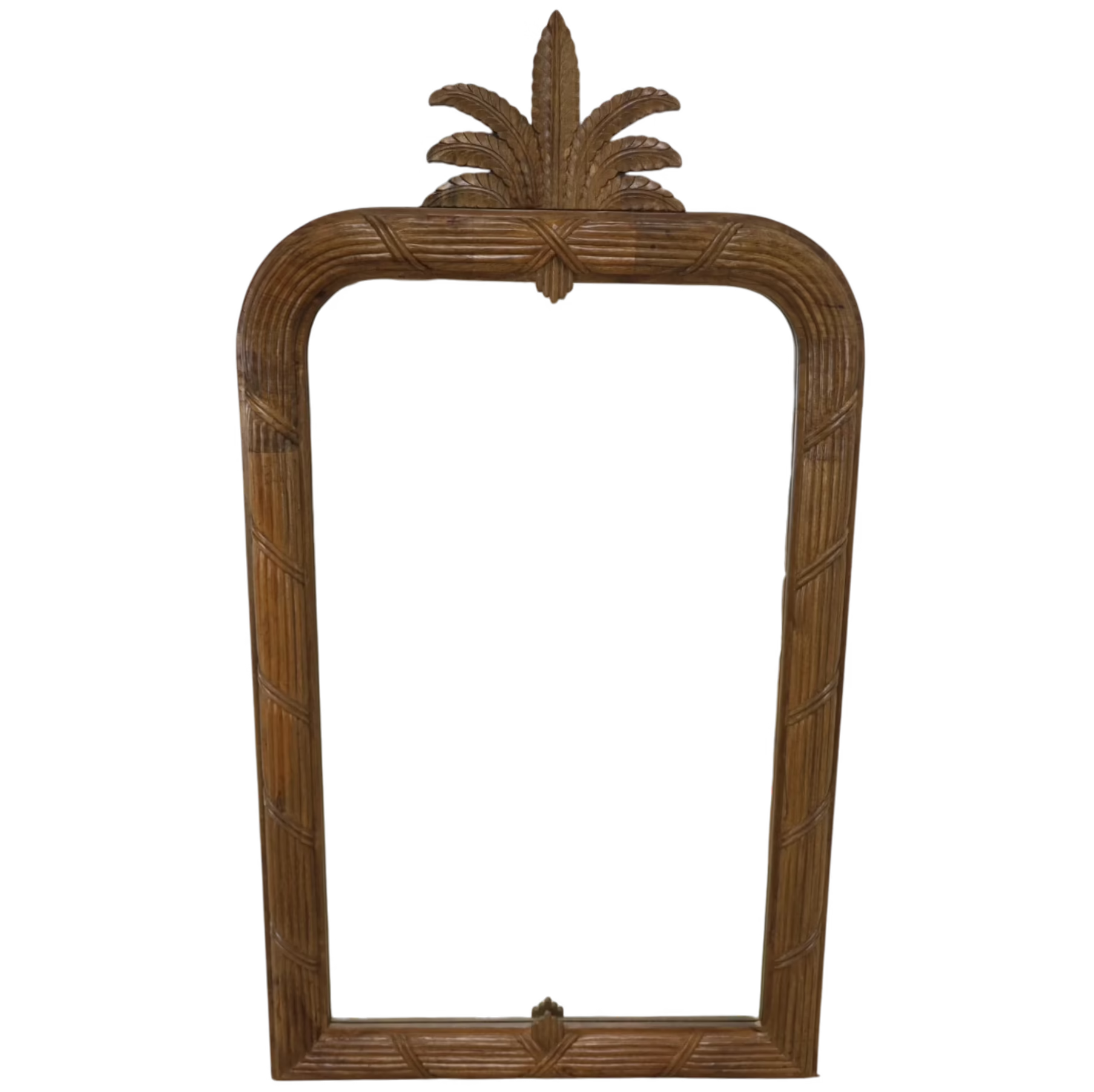
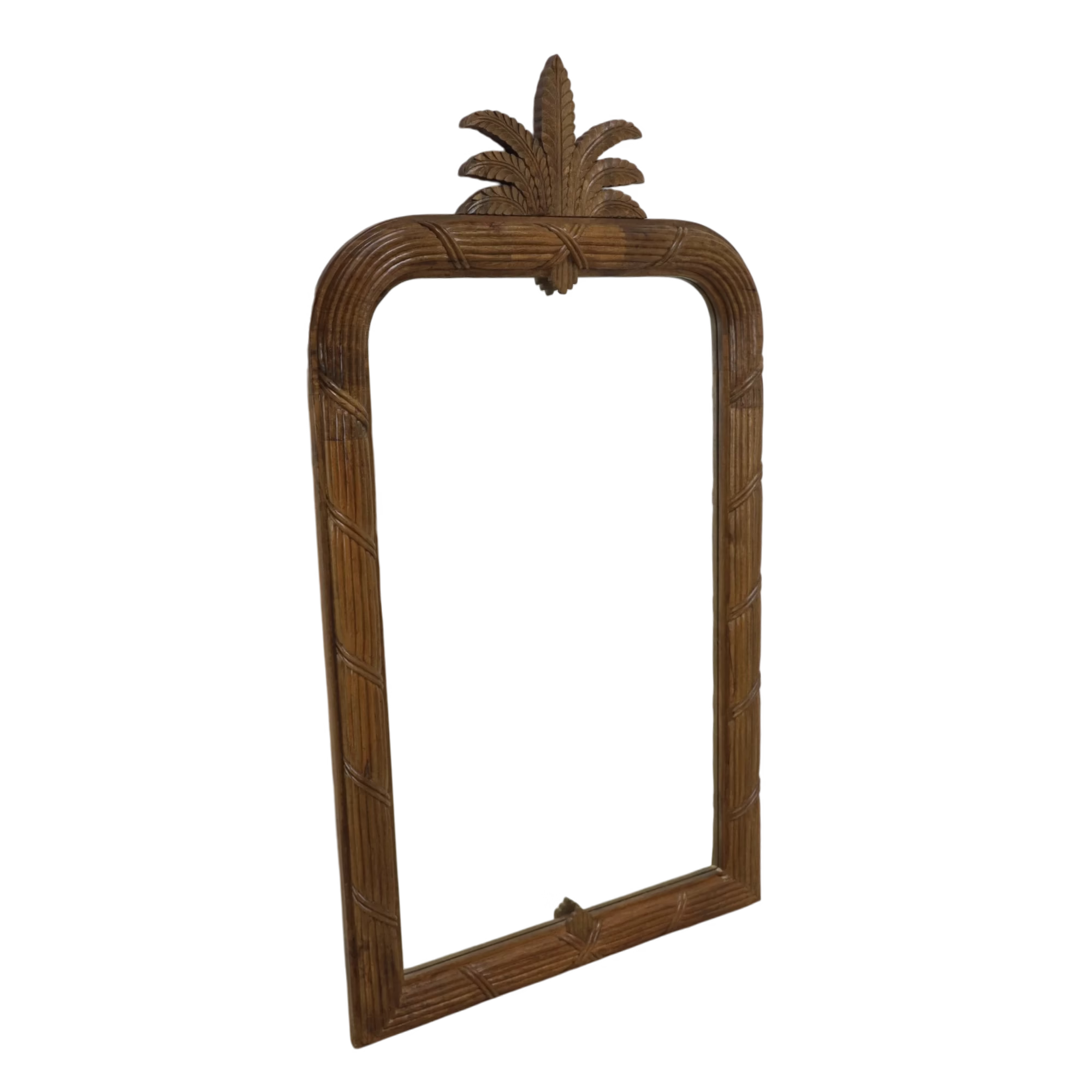
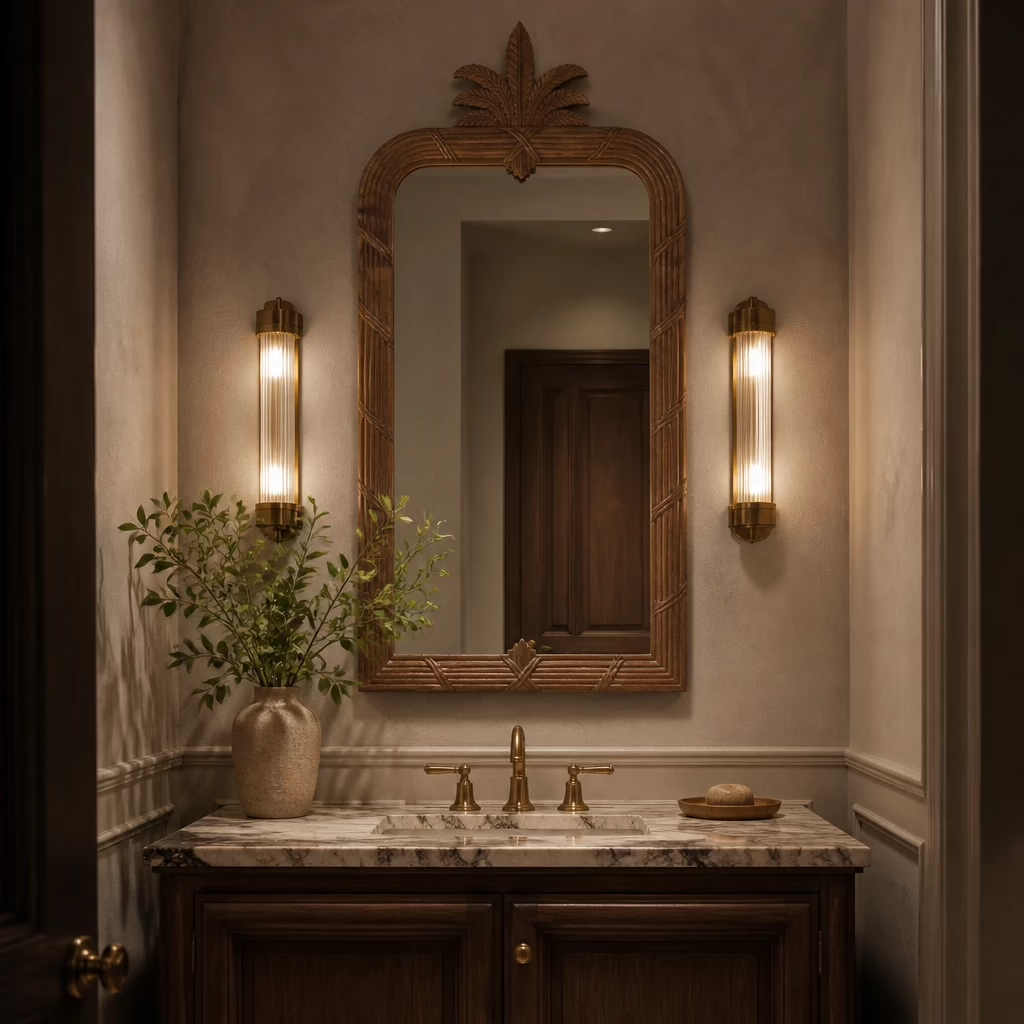
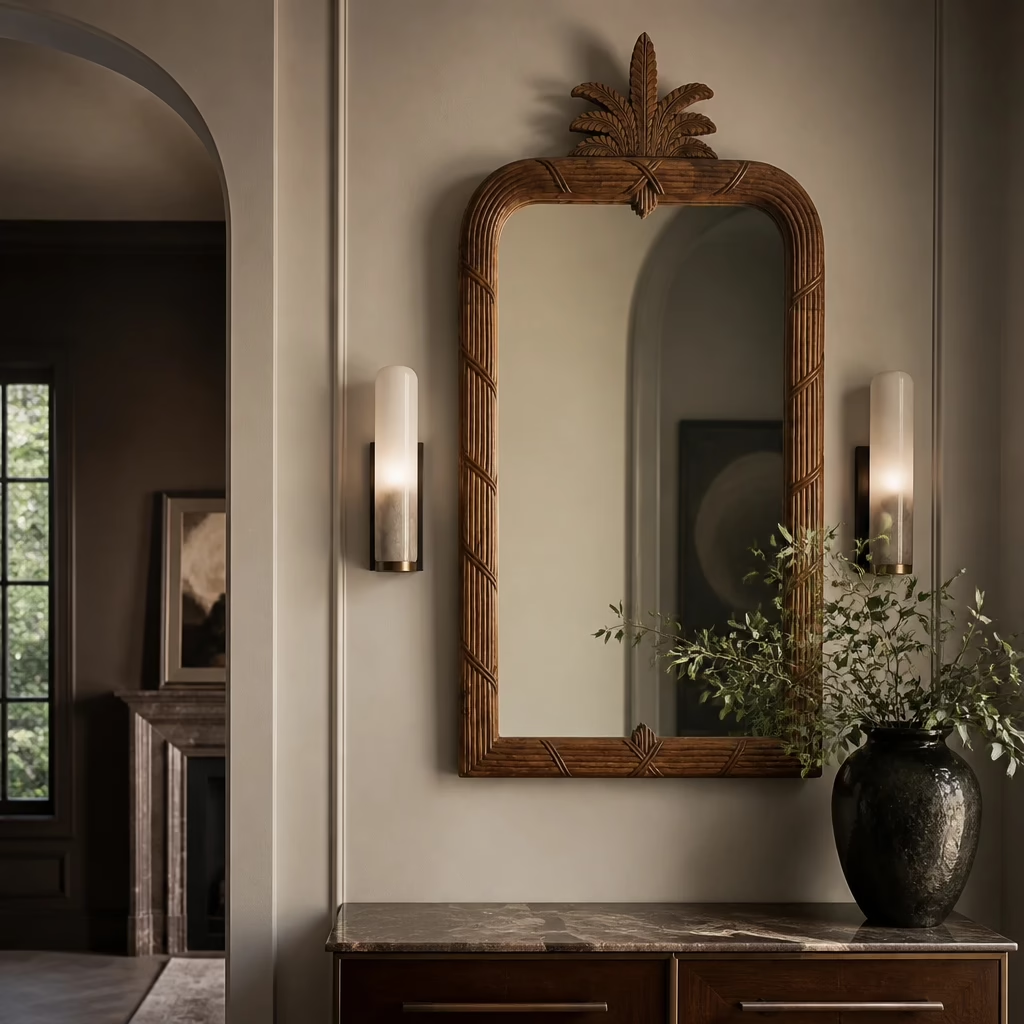
The Avignon Mirror announces itself before you notice the reflection. A sculptural botanical crown rises above its 72″ frame, turning this Architectural Hand Carved Wall Mirror into a vertical composition that feels closer to built-in millwork than a conventional decorative mirror.
Look first at the frame. Multiple narrow carved channels run around its perimeter, producing a steady linear rhythm that draws the eye upward. When those lines reach the softly rounded upper corners, they do not stop abruptly. They continue through the curve, allowing the geometry of the frame to change without interrupting the visual movement.
Slender carved bands cross those channels at measured intervals. The effect recalls gathered or wrapped reeds, introducing just enough interruption to keep the long vertical frame from becoming repetitive. From across the room, these details create rhythm. Up close, they reveal how much of the Avignon’s character comes from the relationship between one carved element and the next.
Then the frame changes direction entirely.
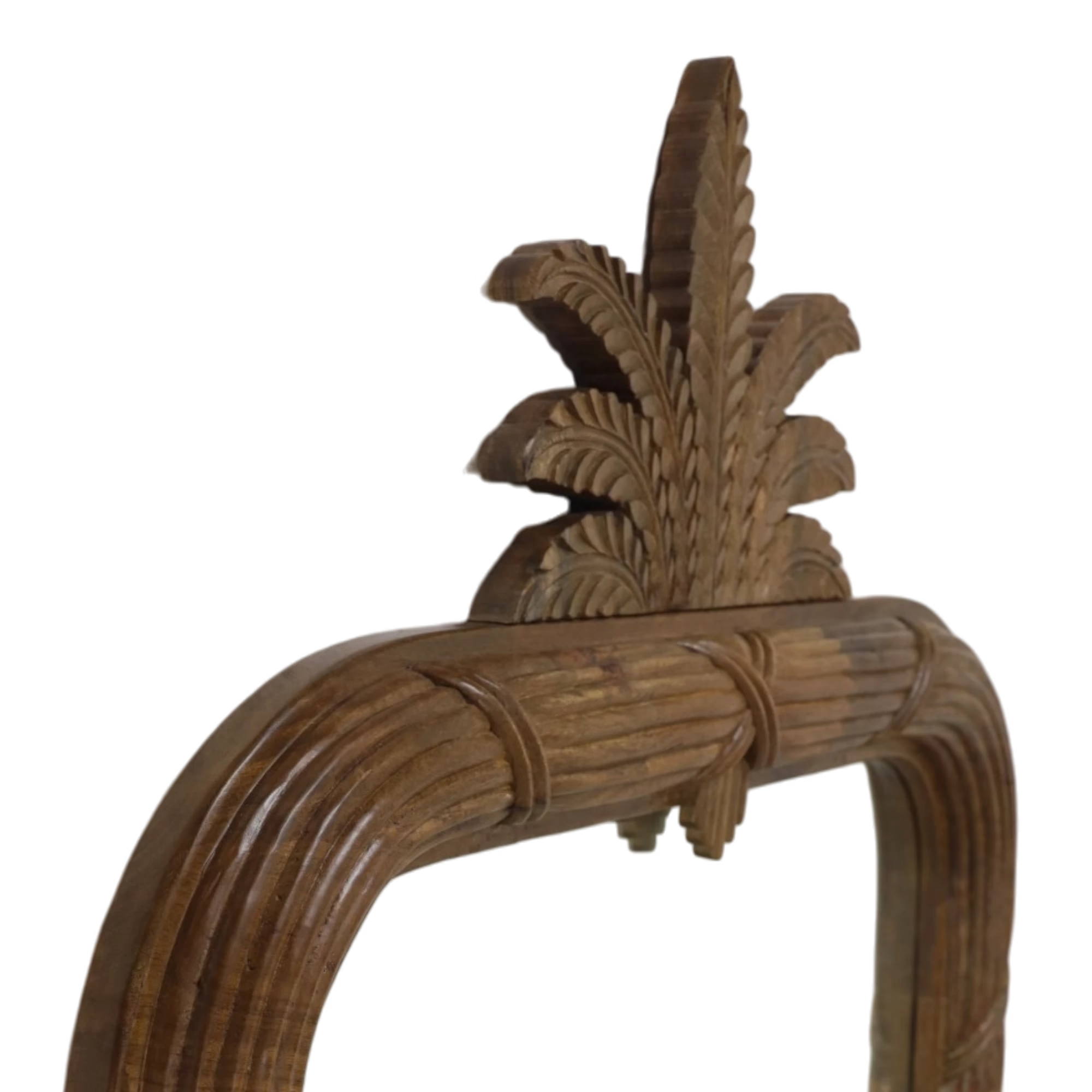
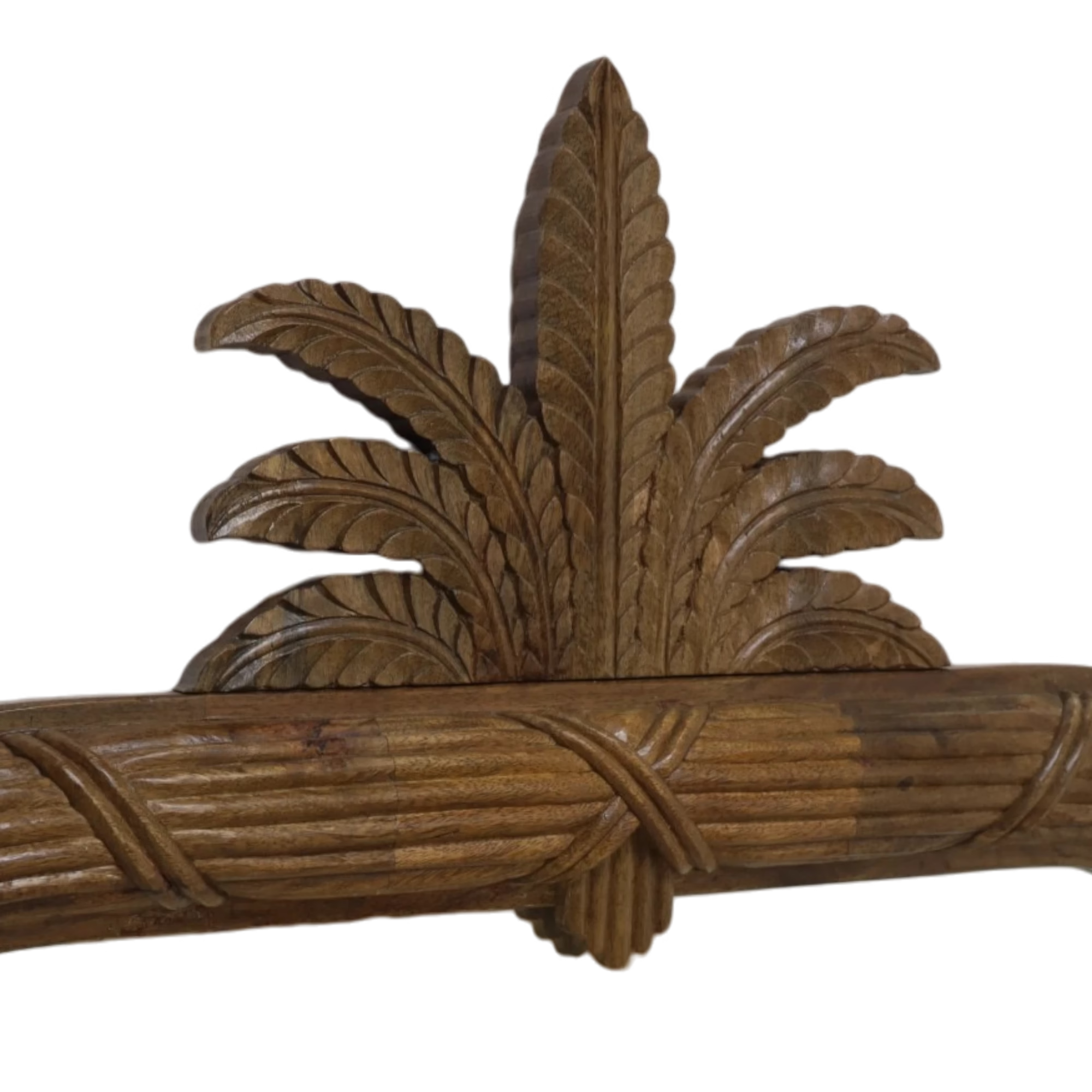
At the crown, a tall central leaf establishes a strong vertical axis while progressively shorter leaves spread outward on either side. Each leaf carries incised surface detail, and the entire crest projects beyond the primary frame rather than appearing as a flat decorative outline. This is the signature gesture of the Architectural Hand Carved Wall Mirror: expressive enough to be memorable, but organized strongly enough to remain composed.
There is an equally important detail at the opposite end. Centered along the lower rail is a much smaller carved flourish that visually answers the crown above. The two ornaments are intentionally unequal—the upper crest commands attention while the lower detail quietly completes the axis. That relationship keeps the elaborate crown from feeling disconnected from the rest of the design.
This is an important lesson in ornament. Detail feels more sophisticated when it has hierarchy. On the Avignon, the botanical crest provides the gesture, the carved perimeter supplies rhythm, the small lower ornament closes the composition, and the broad reflective opening gives the eye somewhere to rest.
The mirror’s tall, relatively narrow proportions reinforce the same idea. At 39″ wide and 72″ high, the Architectural Hand Carved Wall Mirror has substantial physical presence without becoming visually broad or heavy. Its height pulls the eye upward while preserving floor space, making it especially effective on walls that need stature rather than another piece of furniture.
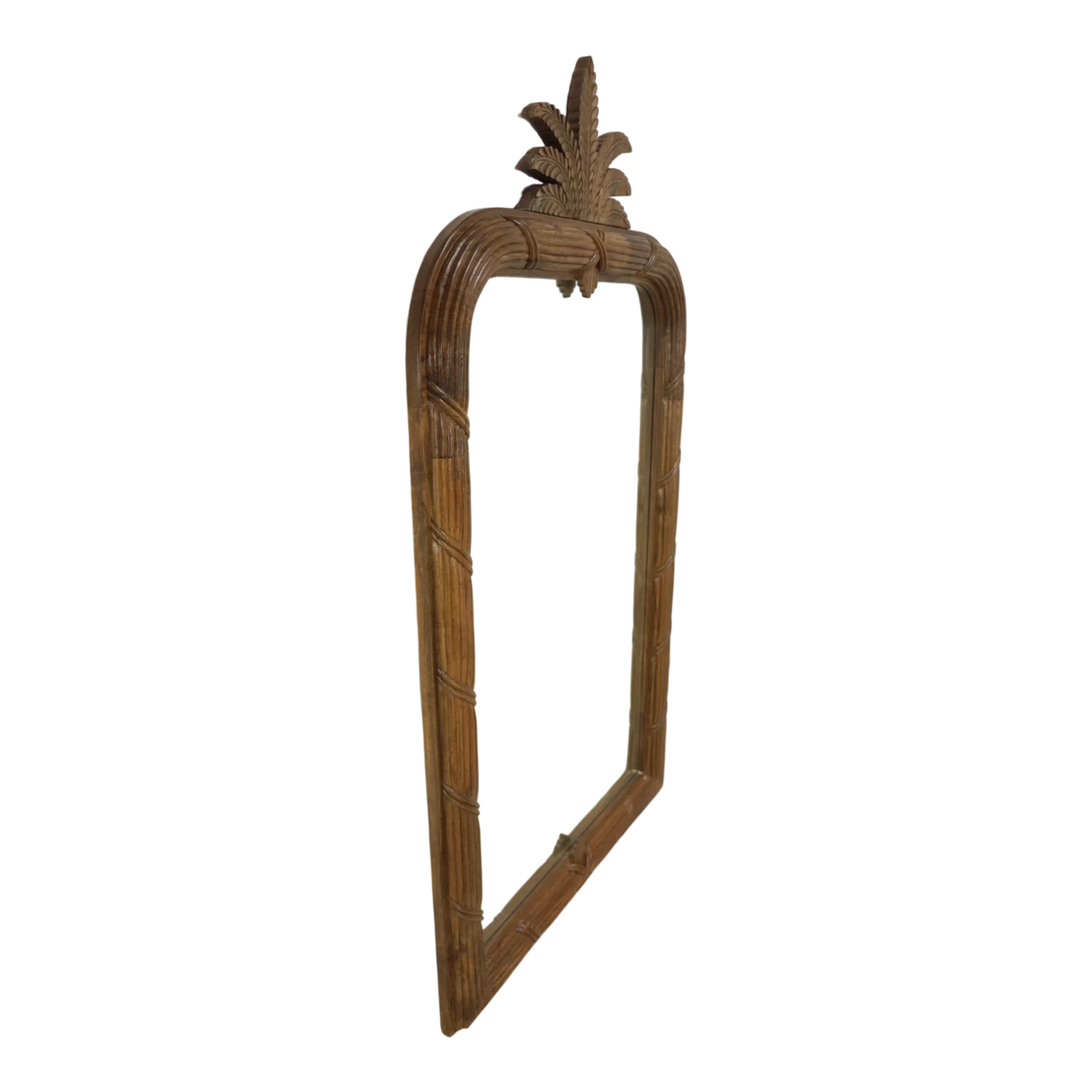
Move around the mirror and another characteristic emerges. The carving is genuinely dimensional. Raised channels catch the light while recessed portions of the Vintage Walnut finish appear deeper in tone. The botanical leaves project beyond the surrounding frame, creating layers of highlight and shadow that become more noticeable when the mirror is viewed from an angle.
The rounded upper corners play an important role here as well. Their softer transition prevents the long frame from feeling rigid, while the continuity of the carving helps the eye move naturally from one vertical side to the other. It is a small design decision with a large effect on how composed the mirror feels.
The Vintage Walnut finish brings warmth to all of this structure. Against plaster, limestone, marble, linen, painted paneling, or lighter woods, its brown tone creates definition without requiring strong color. The finish also makes the relief legible: raised carving catches more illumination, while recessed areas remain quieter.
At 72″ tall, the Avignon demonstrates why scale matters in interior design. A large vertical mirror does more than fill empty wall space. It redirects sightlines, reflects a larger portion of the room, and changes the perceived height of the wall itself. That allows this Architectural Hand Carved Wall Mirror to create architectural presence without taking up a single additional square foot of floor area.
The Avignon’s strongest quality is ultimately not any single leaf, channel, or carved band. It is the way all of those elements belong to the same composition. From across the room, the mirror reads as architecture. Move closer, and the craftsmanship gradually reveals itself.
A Closer Look
Notice where the botanical crown meets the upper rail.
The tall central leaf aligns directly with the vertical center of the mirror, while the shorter leaves spread outward above the rounded corners. That alignment prevents the crown from feeling like an ornament simply added to the top. Instead, it appears to grow naturally from geometry already established by the frame below.
Now look at the bottom rail. The small centered carving repeats the same axis at a much quieter scale.
The design lesson is subtle but useful: strong ornament does not require equal decoration everywhere. It requires hierarchy.
Craftsmanship in Every Detail
The Avignon’s character comes from several visible carving techniques working together.
The perimeter uses closely spaced linear channels that maintain their rhythm across long vertical runs and through the rounded upper corners. Narrow crossing bands periodically interrupt the channels, adding another layer of carved relief without obscuring the underlying structure.
Above them, the botanical crown changes from linear to organic carving. Individual leaves extend outward at different heights, with incised veins giving each form greater definition. Seen from an angle, the physical projection of the crest becomes especially clear.
The Vintage Walnut finish visually connects these elements. Light moves differently across raised and recessed surfaces, allowing the hand carving to remain readable without overpowering the mirror glass.
Dimensions & Specifications
Product Name
Avignon Mirror
Product Type
Architectural Hand Carved Wall Mirror
Overall Width
39 Inches
Overall Height
72 Inches
Frame Material
Wood
Finish
Vintage Walnut
Color Family
Warm Walnut Brown
Orientation
Vertical
Design Characteristics
- Hand carved wood frame
- Sculptural botanical crown
- Tall central leaf motif
- Layered carved leaf detailing
- Continuous reeded / fluted carving
- Crossing-band carved details
- Rounded upper corners
- Small centered lower ornament
- Tall architectural proportions
- Generous reflective opening
Frequently Asked Questions
What makes the Avignon Mirror distinctive?
The Avignon is an Architectural Hand Carved Wall Mirror distinguished by its sculptural botanical crown, continuous reeded frame, rounded upper corners, crossing-band carving, and tall 39″ x 72″ proportions. A smaller carved ornament at the bottom visually balances the larger crown above.
How large is the Avignon Mirror?
The mirror measures 39″ wide by 72″ high. Its narrow vertical proportion creates substantial presence while using wall height rather than floor area.
Is the frame really hand carved?
Yes. The Avignon is a Hand Carved Wall Mirror with dimensional carving visible throughout the perimeter and botanical crown.
What color is the Avignon Mirror?
The frame has a Vintage Walnut finish that reads as a warm medium-to-deep brown and helps reveal the dimensional carving through natural highlight and shadow.
Where does this mirror work best?
This Architectural Hand Carved Wall Mirror works especially well above a substantial console, chest, or vanity; in an entryway or dining room; between wall panels; at the end of a hallway; or on a bedroom or living-room wall that needs vertical scale.
What interior styles work with the Avignon Mirror?
The Avignon can complement transitional, European-inspired, Mediterranean, modern classic, organic modern, collected, and traditional interiors. Its strongest characteristic is not adherence to one style but the combination of architectural proportion and carved wood craftsmanship.
Can it replace a large piece of artwork?
Yes. The mirror can function as a major wall focal point while also reflecting light and surrounding architecture. This makes it particularly useful in rooms where oversized artwork might otherwise be used.
How should the wood frame be cared for?
Dust the carved frame with a soft, dry cloth or soft detailing brush. Avoid abrasive cleaners and excessive moisture. Apply glass cleaner to a cloth rather than directly spraying around the carved frame.